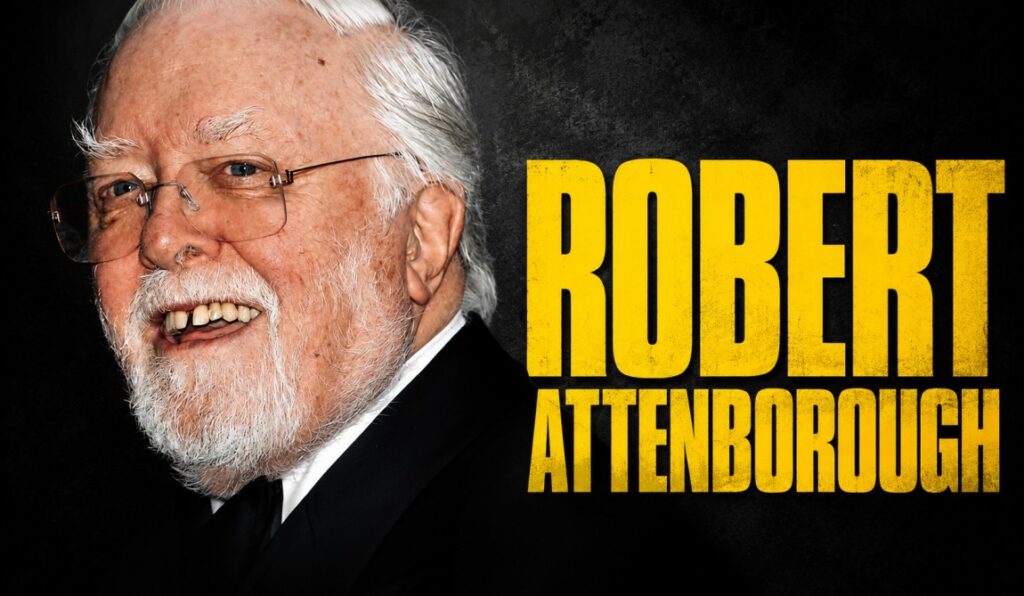
When people hear the name Attenborough, their minds immediately travel to sweeping nature documentaries, a velvet voice narrating the wonders of the natural world, or the quiet urgency of a man pleading with humanity to protect its oceans. Sir David Attenborough has become synonymous with natural history itself. Yet behind that towering public legacy stands a far quieter story — the life of his son, Robert Attenborough, a man who chose scholarship over spotlights and dedicated research over public recognition.
Robert Attenborough is not a household name, and by all indications, that is precisely how he prefers it. As the elder child of one of Britain’s most celebrated naturalists, he has spent decades contributing meaningfully to the fields of bioanthropology and human population biology, carving out an intellectual identity entirely his own. This biography explores who Robert Attenborough truly is — his origins, his education, his academic career, and the quiet family bonds that have defined his life in 2026 and beyond.
Robert Attenborough Early Life and Family Background
Robert Attenborough was born into a family already destined for distinction. His father, Sir David Frederick Attenborough, was a Cambridge-educated broadcaster and naturalist whose career would span more than seven decades. His mother, Jane Elizabeth Ebsworth Oriel, was a private and graceful woman who gave the family warmth and stability during David’s long years of travel and production.
David and Jane married in 1950, building a family home in Richmond, Surrey — a sanctuary amid the relentless pace of David’s expanding broadcasting career. Robert was the elder of their two children. His younger sister, Susan Attenborough, later worked as a primary school headteacher before channeling her energy into charitable causes, a path that — much like Robert’s — kept her entirely removed from tabloid culture and celebrity life.
Growing up in the Attenborough household meant growing up saturated in intellectual curiosity. Even during brief spells between productions, David read widely, debated science and natural history at the dinner table, and brought specimens, books, and stories from distant corners of the world into the family home. For young Robert, this environment was profoundly formative. It cultivated in him a respect for empirical inquiry and a fascination with understanding human beings not just culturally, but biologically and evolutionarily — the foundational instinct that would define his entire academic life.
The family navigated real difficulty when Jane Attenborough’s health declined over the years. She passed away in 1997, a loss that affected every member of the family deeply. David has spoken in interviews about the void Jane’s death created in his personal life. Robert and Susan leaned on one another through that period, and their sibling bond reportedly remained strong through the decades that followed.
Robert completed his formative schooling in England before pursuing higher education in the biological and social sciences — a direction markedly different from his father’s path into broadcasting and nature documentary filmmaking, but equally driven by a desire to understand the living world.
Robert Attenborough Academic Career
Robert Attenborough’s professional identity is built entirely within academia, and it is here that his story becomes most compelling. He pursued advanced study in anthropology and related disciplines, eventually specializing in bioanthropology — a rigorous field positioned at the intersection of human biology, cultural evolution, and population health. The questions it asks are among the most fundamental in science: How do human populations adapt biologically to different environments? What do patterns of disease and mortality reveal about evolutionary history? How do cultural practices and biological outcomes shape one another across generations?
Robert dedicated the productive years of his career to exploring these questions with patience and methodological seriousness.
He secured a position as Senior Lecturer in Bioanthropology at the Australian National University (ANU) in Canberra, Australia — one of the most respected research institutions in the Southern Hemisphere and consistently ranked among the world’s leading universities. The ANU has long maintained outstanding departments in archaeology, anthropology, and the social sciences, making it a natural institutional home for someone with Robert’s expertise in human population biology.
His scholarly focus at ANU centered significantly on the populations of New Guinea — encompassing both independent Papua New Guinea and the Indonesian-administered western region of the island. This vast, mountainous island is among the most linguistically and ethnically diverse places on Earth, home to hundreds of distinct groups whose biological adaptations and cultural traditions developed over thousands of years in relative geographic isolation. For a researcher working in human genetic diversity and population health biology, it represents an extraordinary field environment.
Robert’s research in this region examined how communities had adapted over millennia to specific environmental pressures — altitude, diet, pathogen exposure, and subsistence patterns. His work contributed substantively to the academic literature on Pacific anthropology, human variation, and the relationship between traditional cultural practices and measurable health outcomes. It was careful, cumulative science of the kind that rarely makes headlines but steadily advances collective understanding.
Beyond his fieldwork and ANU Canberra responsibilities, Robert maintained significant academic ties in the United Kingdom. He held a connection to the Department of Archaeology at the University of Cambridge — his father’s own alma mater — engaging with ongoing scholarly conversations about evolutionary anthropology and the behavioral dimensions of human biology. Cambridge’s archaeology department has historically served as a hub for interdisciplinary work bridging the biological and social sciences, making it a congenial intellectual space for someone with Robert’s wide-ranging research interests.
Throughout his career, Robert authored and co-authored peer-reviewed academic papers, contributed chapters to edited scholarly volumes, and participated in conferences and research symposia. His publications, while not aimed at general audiences, have been cited within the specialist literature on Pacific population studies and biological anthropology. This body of work — accumulated slowly, through fieldwork, archival research, and collaborative scholarship — represents a genuine and lasting contribution to human knowledge.
Robert Attenborough Family Life
Robert Attenborough has maintained exceptional discretion about his personal life across many decades, and that boundary has never wavered. Unlike many figures connected to public personalities, he has never offered interviews, maintained social media accounts, or participated in any form of authorized biographical disclosure about his domestic circumstances.
It is not publicly confirmed whether Robert Attenborough married or had children. No verified biographical source has named a spouse or partner, and claims circulating in various online spaces appear to derive from speculation rather than documented fact. Robert appears to have drawn a firm and consistent line between his professional academic identity and his private world — a decision that deserves straightforward respect.
What is clearly established is that his relationship with his sister Susan Attenborough remained close and mutually supportive through their adult years. Susan’s career in education and subsequent charity work reflects a similarly grounded, service-oriented approach to life — one that prioritizes contribution over visibility. The Attenborough siblings appear to have absorbed from both parents a fundamental disinterest in personal celebrity, a quality that sits in quiet contrast to the global fame surrounding their father’s name.
Robert spent a substantial portion of his career living in Canberra — Australia’s meticulously planned capital city, shaped by academic institutions, government, and a culture of focused intellectual work. Whether he remained in Australia after concluding his career at ANU or returned to the United Kingdom has not been publicly reported. His domestic life, in whatever form it has taken, remains entirely out of the public record — consistent with a man whose professional reputation rests wholly on the quality of his scholarship.
The Attenborough Legacy
The Attenborough name carries remarkable weight in British cultural life. Sir David Attenborough’s contributions to natural history broadcasting stand without parallel. From his early work at the BBC in the 1950s through the landmark documentary series that followed — Life on Earth, The Living Planet, Planet Earth, Blue Planet, and Our Planet — David created a body of work that has educated and deeply moved hundreds of millions of viewers across generations. He has accumulated more honorary degrees than almost any individual in British history and has received a knighthood, the Order of Merit, eight BAFTAs, multiple Emmy Awards, and a Peabody Award.
The legacy extends further. David’s brother, the late Sir Richard Attenborough, was a towering figure in British cinema — an actor and filmmaker celebrated for productions including Gandhi, one of the most honored films in film history. The Attenborough family thus encompasses achievement across strikingly different cultural domains: natural history, environmental advocacy, cinema, and now academic research.
Within this constellation of distinction, Robert occupies a genuinely different kind of position. He has made no attempt to extend the family name commercially or trade on its cultural capital. His intellectual legacy belongs entirely to the world of biological anthropology — a world governed by citation counts, peer recognition, and the slower satisfactions of accumulated scholarly knowledge, not television audiences.
Yet legacy is not always synonymous with visibility. Robert’s contributions to understanding human population biology in the Pacific region represent a real addition to what humanity knows about itself. The graduate students he taught at ANU — who went on to conduct their own research, mentor their own students, and build on the foundations Robert laid — carry forward an intellectual inheritance tracing directly back through his laboratory and lecture hall. That form of legacy is quiet, diffuse, and durable in ways that media fame rarely is.
Robert Attenborough’s Relationship with His Father
The bond between Robert Attenborough and Sir David has never been laid out in detail for public consumption, and neither man has given interviews that explore its texture with any specificity. What can reasonably be inferred is that the relationship has been warm and genuinely close, grounded in shared values even when professional paths diverged entirely.
David Attenborough has spoken publicly about his family in broad terms — conveying pride in his children, gratitude for their steadiness, and an acknowledgment that family life served as an anchor through decades of extraordinary professional mobility. He has described Jane’s death in 1997 as the most significant personal loss of his life, and it is reasonable to conclude that Robert and Susan’s continued presence provided meaningful support through that grief.
David’s guiding values — the conviction that understanding the natural world matters, that evidence deserves patient pursuit, that knowledge accumulated carefully is worth more than attention gained cheaply — are values that appear to run directly through Robert’s academic choices. A career spent in bioanthropological fieldwork in Papua New Guinea, publishing in specialist journals, teaching graduate students in Canberra — these are not the choices of someone motivated by recognition. They are the choices of someone who believes, as his father clearly does, that careful inquiry is intrinsically worthwhile.
Father and son traveled radically different roads — one broadcasting to global audiences from tropical rainforests and Arctic tundras, the other teaching in seminar rooms and conducting ethnographic population research in the Pacific. But the intellectual orientation connecting both careers is unmistakable: curiosity, rigor, a preference for evidence over assumption, and a willingness to spend years on a question rather than rush to a convenient answer. That shared disposition is perhaps the most genuine expression of the Attenborough family legacy.
Public Interest and Speculation
The public curiosity surrounding Robert Attenborough is almost entirely generated by his father’s immense fame. Admirers of Sir David Attenborough naturally become curious about those closest to him — his children, his grandchildren, the private world existing behind the documentary credits. Robert, as the elder child and only son, draws particular attention in online searches.
This attention creates a familiar problem: where verified information is scarce, speculation fills the gap. Various online sources make claims about Robert Attenborough’s net worth, personal relationships, and biographical details that have no traceable basis in credible documentation. These assertions circulate widely in the biographical aggregator ecosystem that populates much of the internet’s celebrity-adjacent content landscape. None should be treated as reliable without independent verification from authoritative sources.
What remains solidly verifiable is Robert’s academic record. His affiliation with ANU is documented in institutional and scholarly sources. His research focus on New Guinea populations and human population biology is consistent across all professional references. His connection to Cambridge’s archaeology department appears in academic literature. Together, these facts form an honest, if incomplete, portrait of a man who spent his working life in dedicated intellectual service.
The question of Robert Attenborough’s net worth — which surfaces frequently in search queries — is essentially unanswerable with precision. Senior lecturer positions at Australian research universities offer professional compensation that is comfortable by academic standards and modest by entertainment industry standards. Robert has never been involved in commercial broadcasting, has not published mass-market books, and has not participated in lucrative celebrity speaking engagements. His financial circumstances, whatever they are, almost certainly reflect those realities.
The deeper question — why Robert Attenborough draws public curiosity at all — reveals something genuine about how people think about fame, inheritance, and family. There is a persistent human instinct to wonder whether the children of exceptional people carry that exceptionalism forward, whether intellectual distinction runs in families, whether the private lives of celebrated figures hold the same qualities that make them compelling in public. In Robert’s case, the evidence suggests the qualities do run in the family — expressed differently, in a quieter register, but no less authentically.
Bio Table
| Detail | Information |
| Full Name | Robert Attenborough |
| Famous Father | Sir David Frederick Attenborough |
| Mother | Jane Elizabeth Ebsworth Oriel |
| Sibling | Susan Attenborough (younger sister) |
| Nationality | British |
| Field of Study | Bioanthropology, Human Population Biology |
| Academic Title | Senior Lecturer |
| Primary Institution | Australian National University (ANU), Canberra |
| UK Academic Ties | Department of Archaeology, University of Cambridge |
| Key Research Area | New Guinea populations, human genetic diversity, population health |
| Uncle | Sir Richard Attenborough (actor and filmmaker) |
| Mother’s Passing | 1997 |
| Marital Status | Not publicly confirmed |
| Children | Not publicly confirmed |
| Net Worth | Not publicly documented |
| Public Profile | Deliberately private; no social media or media presence |
FAQs
Who is Robert Attenborough?
He is the son of Sir David Attenborough and a British academic specializing in bioanthropology and human population biology at the Australian National University.
What is Robert Attenborough’s educational background?
He pursued advanced study in anthropology and biological sciences, later conducting specialist research in bioanthropology with academic ties to both ANU and the University of Cambridge.
Where did Robert Attenborough work professionally?
Robert served as a Senior Lecturer in Bioanthropology at the Australian National University (ANU) in Canberra, Australia, his primary and most significant academic post.
What was the main focus of Robert Attenborough’s research?
His research centered on human population biology, genetic diversity, and health patterns among indigenous communities in New Guinea and the broader Pacific region.
Does Robert Attenborough have a wife or children?
No credible source has publicly confirmed details about his marital status or whether he has children — he has kept all personal matters entirely private throughout his life.
How is Robert Attenborough connected to Richard Attenborough?
Sir Richard Attenborough, the celebrated British actor and filmmaker, was Robert’s uncle — the older brother of his father, Sir David Attenborough.
What is Robert Attenborough’s net worth?
His net worth has never been publicly disclosed. As an academic rather than a media personality, his earnings would reflect a senior university lecturer’s professional salary, not entertainment industry figures.
Did Robert Attenborough follow in his father’s footsteps?
Not professionally. While Sir David built a legendary career in nature documentaries and broadcasting, Robert pursued a completely independent path in academic research and university teaching.
Why does Robert Attenborough attract public interest despite being a private person?
His connection to Sir David Attenborough — one of the most recognized and beloved public figures in the world — naturally generates curiosity about his family background, career, and personal life.
What distinguishes the Attenborough family legacy?
The Attenborough family has produced exceptional figures across multiple fields: Sir David in natural history broadcasting, Sir Richard in cinema, and Robert in biological anthropology — each contributing to human understanding in fundamentally different ways.
Final Thoughts
Robert Attenborough’s story functions as a quiet counternarrative to the modern obsession with visibility. In an era that measures significance through social reach and viral attention, he represents something genuinely uncommon: a person who spent an entire career doing serious, difficult, meaningful work without once pursuing public acknowledgment for it.
He was shaped by one of the most intellectually generous households in modern British life — raised by a father whose curiosity about the natural world recognized no boundaries, and a mother whose steady, private grace gave the family its foundation. He took those formative influences and channeled them not into broadcasting or celebrity, but into decades of bioanthropological research, fieldwork among some of the world’s most isolated human communities, and the patient labor of university teaching.
The Attenborough name will long be associated primarily with Sir David’s extraordinary contributions to natural history and environmental awareness. But within that famous name lives a quieter story — a son who chose knowledge over fame, scholarship over spectacle, and the slow satisfaction of genuine inquiry over the immediate gratification of public recognition.
Not every legacy announces itself. Some are built carefully, passed forward through students and citations and the accumulated understanding of generations. Robert Attenborough built exactly that kind of legacy — and it is, by any honest measure, one worth knowing about.
I’m John Ilam, a content writer on AgeBioHub, focused on creating biography-based articles. I write about public figures, their life stories, careers, and personal backgrounds in a clear and simple way.
I keep my content focused on biographies so readers can easily find the information they’re looking for without confusion. My goal is to make every article informative, structured, and easy to read.