
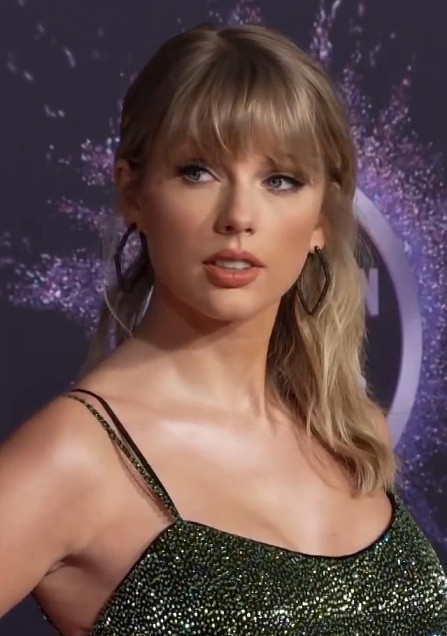
Taylor Swift age in 2026 is 36 years old, and this single fact opens the door to one of the most remarkable life stories in modern music history. Born on December 13, 1989, in West Reading, Pennsylvania, she has spent more than two decades reshaping what it means to be a recording artist, a businesswoman, and a cultural force all at once. Millions of people search her name every day — not just out of celebrity curiosity, but because her journey genuinely mirrors their own. She grew up publicly, made mistakes publicly, reinvented herself publicly, and came out stronger every single time. This complete guide covers her birthday, early life, career timeline, net worth, and the deeper story behind why her age keeps mattering more with every passing year.
Quick Bio Information About Taylor Swift Age And Career
| Detail | Information |
| Full Name | Taylor Alison Swift |
| Date of Birth | December 13, 1989 |
| Age in 2026 | 36 Years Old |
| Birthplace | West Reading, Pennsylvania, USA |
| Zodiac Sign | Sagittarius |
| Nationality | American |
| Profession | Singer, Songwriter, Record Producer, Actress |
| Career Start | Early 2000s |
| Debut Album | Taylor Swift (2006) |
| Genres | Country, Pop, Folk, Indie Folk, Synth-Pop |
| Notable Albums | Fearless, Speak Now, Red, 1989, Reputation, Lover, Folklore, Evermore, Midnights, The Tortured Poets Department |
| Major Tour | The Eras Tour (2023–2024) |
| Record Label | Republic Records (formerly Big Machine Records) |
| Grammy Awards | 14 Grammy Awards including 4 Album of the Year |
| Net Worth | Estimated Over $1.1 Billion |
| Fanbase Name | Swifties |
| Business Ventures | Taylor’s Version Re-recordings, Production Company |
| Known For | Narrative Songwriting, Genre Reinvention, Artist Rights Advocacy |
| Active Years | 20+ Years in the Music Industry |
Taylor Swift Age Today In 2026
Taylor Swift’s current age is 36, placing her at a stage where creative maturity, commercial dominance, and personal authority all converge. She was born on December 13, 1989, and will turn 37 later this year. Her birth year puts her squarely in the millennial generation — the same audience that discovered her as teenagers and has grown alongside her through every era of her evolving sound.
What truly distinguishes her at this age is the combination of factors that rarely exist together. Most artists at 36 are either coasting on nostalgia or struggling to stay commercially relevant. Taylor Swift is doing neither. She controls her masters through her Taylor’s Version re-recording campaign, headlines stadium tours that generate economic ripple effects across entire cities, and releases albums that debut at number one globally within hours. Her age in 2026 is not a milestone to be managed — it is proof that the best chapter of her story may still be ahead.
Early Life And Childhood Journey
Taylor Alison Swift was raised in Wyomissing, Pennsylvania, by her father Scott Kingsley Swift, a financial advisor, and her mother Andrea Gardner Swift, a former marketing executive turned homemaker. The household was stable, creative, and deeply supportive — the kind of environment where a child’s unusual passions are treated as serious pursuits rather than passing phases.
From her earliest years, she was drawn to performance and storytelling. She took part in local Berks Youth Theatre Academy productions, practiced vocal training, and developed a habit of writing poetry that would eventually evolve into her signature narrative songwriting style. Her family also managed a Christmas tree farm, a piece of her childhood she later wove into her music. Growing up surrounded by seasonal rhythms, rural landscapes, and family traditions gave her an emotional vocabulary rooted in specific, sensory detail — the same quality that makes her lyrics feel so personal to so many different listeners.
First Steps Into Music At A Young Age
By age 11, Taylor Swift had already identified country music as her calling, inspired by artists like Shania Twain and Dolly Parton whose storytelling approach matched her own instincts. She began making trips to New York City with her mother to explore musical theater training, and then shifted her focus entirely toward Nashville — the heartbeat of American country music.
At just 11 years old, she traveled to Music Row during spring break, carrying hand-delivered demo tapes to record labels with a level of determination that most adults never summon. Those early visits did not immediately produce a deal, but they established her presence in a city that would soon become her professional home. By age 14, her family relocated to Hendersonville, Tennessee, specifically to support her music ambitions — a bold, family-wide commitment to her dream. That same year, she signed a staff songwriting deal with Sony/ATV Music Publishing, becoming one of the youngest writers ever brought on board in that capacity. This was not luck. It was the reward for years of focused preparation during an age when most teenagers are still figuring out their interests.
Teenage Fame And First Album Success
In October 2006, Taylor Swift released her self-titled debut album at 16 years old, and the country music world took immediate notice. Singles like “Tim McGraw,” “Teardrops on My Guitar,” and “Our Song” connected with young listeners who recognized something rare — a teenage girl writing her own songs about her own life with a precision and honesty that felt completely unfiltered.
What set the album apart commercially and critically was her sole or co-writing credit on every track — an almost unheard-of achievement for any debut artist, let alone one still attending high school. Her authentic voice and relatable lyrics built a fanbase that was emotionally invested rather than casually curious. The album went multi-platinum and established her as a genuine rising force in country music, not just a novelty act or a manufactured teen product. Industry veterans recognized early that her pen was her greatest competitive advantage, and that recognition would prove correct across every decade that followed.
Early Stardom And Fearless Era Growth
Fearless, released in 2008 when Taylor Swift was 18, transformed her from a promising country newcomer into a global music phenomenon. Hits like “Love Story” and “You Belong With Me” crossed from country radio into mainstream pop charts with a naturalness that surprised even industry insiders. The crossover was not engineered — it happened because her songwriting transcended genre boundaries through sheer emotional resonance.
The recognition came swiftly and at a historic scale. Fearless won four Grammy Awards, including Album of the Year, making her the youngest artist in Grammy history to claim that particular honor at the time. She also swept multiple Country Music Association Awards and sold out arena tours while still a teenager. At an age when most people are navigating their first year of adulthood, she was already redefining what award-winning artistry looked like in the modern music landscape. The Fearless era did not just launch her career — it announced that she was a generational talent with staying power built into her foundation.
Transition From Teen Star To Adult Artist
Entering her twenties brought unmistakable growth to both Taylor Swift’s songwriting depth and her public identity. Speak Now in 2010 made a bold statement by being written entirely by her alone — no co-writers, no collaborative safety net. The album demonstrated her confidence as a solo creative voice and showed she was not dependent on a writing team to produce commercially successful, emotionally compelling material.
Red followed in 2012 and stands today as one of the most discussed transitional albums in modern pop history. It blended country instrumentation with pop production, weaving folk vulnerability through arena-scale arrangements. The lyrics tackled heartbreak, betrayal, and emotional complexity with a maturity that caught even her critics off guard. This was the period when journalists and music scholars began treating her not just as a commercial phenomenon but as a genuine literary songwriter whose work deserved serious analysis. Her audience was growing up alongside her, and both parties were becoming more interesting in the process.
Musical Reinvention In Her Twenties
The most consequential artistic decision of Taylor Swift’s career arrived in 2014 with 1989 — a full, deliberate break from country music into synthesizer-driven pop. At 24 years old, she bet her entire established identity on a sound that was new to her catalog. The record produced “Shake It Off,” “Blank Space,” and “Bad Blood”, earned her a second Grammy for Album of the Year, and confirmed that her audience would follow her anywhere she chose to go.
Reputation in 2017 then stripped away the polished pop exterior and replaced it with darker, industrial-influenced production that processed a period of intense public controversy through music. Lover in 2019 swung back into bright romantic territory. Then came the extraordinary double release of Folklore and Evermore in 2020 — quiet, introspective indie folk albums written during the pandemic that drew comparisons to literary fiction and earned widespread critical recognition as her most artistically sophisticated work to date. Each album in her twenties carried a completely different sonic and emotional identity, yet every single one was unmistakably her. That capacity for consistent reinvention within a singular artistic vision is what separates her from virtually every other pop artist working in the same era.
Major Career Milestones By Age
Taylor Swift’s career timeline is one of the most decorated in music industry history, made even more striking by how early each milestone arrived:
- Age 14 — Signed youngest-ever staff songwriter deal with Sony/ATV Music Publishing
- Age 16 — Released debut self-titled album, entered country charts immediately
- Age 18 — Released Fearless, achieved first major global crossover success
- Age 19 — Won Grammy Award for Album of the Year, youngest recipient at that time
- Age 20 — Released Speak Now, entirely self-written with zero co-writers
- Age 23 — Released Red, began blending country and pop production styles
- Age 24 — Released 1989, completed full transition to global pop stardom
- Age 27 — Released Reputation, channeled public controversy into commercial triumph
- Age 29 — Released Lover, began asserting full production and creative control
- Age 30 — Released Folklore and Evermore, earned recognition as a literary artist
- Age 32 — Released Midnights, shattered Spotify streaming records overnight
- Age 33 — Launched The Eras Tour, highest-grossing concert tour in recorded history
- Age 34 — Released The Tortured Poets Department, debuted at number one worldwide
- Age 36 — Remains the most commercially dominant and culturally influential artist on the planet
Taylor Swift In Her Thirties Today
Taylor Swift’s thirties have delivered the strongest commercial and creative performance of her entire career — which is an extraordinary thing to say about someone whose twenties included multiple Grammy wins and global pop domination. The Eras Tour, spanning 2023 and 2024, surpassed one billion dollars in revenue, becoming the highest-grossing concert tour ever documented. Beyond ticket sales, the tour generated measurable economic impact in every city it visited, prompting economists and urban planners to study the phenomenon seriously.
Her ongoing Taylor’s Version re-recording project represents something equally significant. By systematically re-recording her first six albums to reclaim ownership of her original masters, she transformed a personal dispute with her former label into a landmark artist rights movement that changed how the entire industry discusses the relationship between musicians and record companies. Younger artists now enter negotiations with a new awareness of ownership structures, in large part because of the conversation she forced into the open. In her thirties, Taylor Swift is not merely sustaining a career — she is actively reshaping the business infrastructure of the industry she operates within.
Does Age Affect Taylor Swift Career Success
For the vast majority of recording artists, commercial relevance follows a predictable arc — strong early momentum, a peak window, then gradual softening as streaming algorithms favor newer voices and radio programmers chase younger demographics. Taylor Swift has not followed this arc. Her commercial performance in her thirties is statistically larger than anything she produced in her teens or twenties, which is almost without precedent in the documented history of popular music.
The explanation lies in several reinforcing factors working simultaneously. Her emotionally honest storytelling has always aged alongside her audience, meaning the fans who found her at 16 are still finding themselves in her songs at 30. Her business intelligence — evident in everything from album rollout strategy to merchandise design to tour routing — ensures that each release cycle is treated as a carefully constructed event rather than a routine product drop. And her willingness to take genuine creative risks, even when the commercial outcome was uncertain, has earned her a level of audience trust that advertising budgets cannot manufacture. Age has not been a limiting factor in her career. It has been the source of her most valuable asset, which is credibility earned through lived experience.
Public Interest In Taylor Swift Age
The persistent public curiosity about Taylor Swift’s birthday, birth year, and current age reflects something more meaningful than standard celebrity fascination. For tens of millions of listeners, she is not simply an artist they admire from a distance — she is someone whose music has accompanied them through their own most significant life chapters. Fans who were 14 when they first heard “Teardrops on My Guitar” are now 34, navigating careers, relationships, and identities of their own. Her age serves as a living timestamp for their personal histories.
There is also a broader cultural dimension to the interest. In an entertainment industry that has historically treated female artists’ aging as a commercial liability, her trajectory represents a direct and ongoing rebuttal to that assumption. Every album she releases in her thirties that outperforms her earlier work adds another data point to an argument that is quietly but persistently changing industry assumptions about women, longevity, and creative power. People search her age not just to satisfy curiosity but because her answer to that question keeps defying expectations.
Comparison With Other Artists Her Age
Among the generation of artists who rose to prominence in the mid-to-late 2000s, Taylor Swift’s sustained trajectory stands largely alone. Katy Perry, Ke$ha, and others from the same early 2010s pop wave have all experienced significant commercial gaps or struggled to maintain the level of cultural conversation that once surrounded them. Many have transitioned their primary platform toward television, podcasting, reality programming, or entrepreneurial ventures. Taylor Swift has not pivoted. She has remained in the recording studio and on the concert stage, and the returns have grown with each cycle rather than diminishing.
Beyoncé, six years her senior, represents perhaps the most relevant comparison in terms of sustained artistic ambition and commercial dominance. Both artists have demonstrated a commitment to creative reinvention rather than comfortable repetition, and both have used their platforms to make serious statements about industry structure and artist autonomy. Among her exact generational peers, however, Swift occupies essentially singular territory — combining critical respect, Billboard dominance, Swifties fanbase loyalty, and genuine artistic evolution all simultaneously and still accelerating at 36.
How Age Influences Her Music Style
A chronological listen through Taylor Swift’s full discography functions as one of the most compelling documents of artistic maturation available in contemporary popular music. Her earliest recordings are built around clear chord progressions and diary-style lyrics that capture teenage emotional experience with striking accuracy but intentionally limited complexity. The simplicity was never a weakness — it was precisely calibrated to resonate with the audience she was writing for, which included herself.
As her birth year receded further into the past and lived experience accumulated, the architecture of her songwriting changed substantially. The layered imagery, self-referential symbolism, and structural experimentation that characterize her later work reflect a writer who has spent years reading, observing, and processing the world through language. Folklore and Evermore drew serious comparisons to the narrative traditions of indie folk and literary fiction. Midnights explored the specific texture of sleepless self-examination in ways that connected deeply with adult listeners carrying their own private anxieties. The Tortured Poets Department pushed further into symbolic abstraction and emotional excavation than anything she had attempted previously. Her discography is not a collection of albums — it is a musical autobiography in which every new entry is written by a more experienced, more perceptive version of the same person.
FAQs About Taylor Swift Age
How old is Taylor Swift in 2026?
She is 36 years old in 2026, born on December 13, 1989, in West Reading, Pennsylvania.
When is Taylor Swift’s birthday?
Her birthday falls on December 13 — she was born in 1989 and will turn 37 later this year.
What is Taylor Swift’s zodiac sign?
She is a Sagittarius, a sign associated with adventurous spirit, passion, and creative independence.
How old was Taylor Swift when she first became famous?
She released her debut album at 16 in 2006 and reached international superstardom at 18 with the Fearless album.
What is Taylor Swift’s net worth in 2026?
Her net worth exceeds $1.1 billion, earned through music sales, touring, streaming royalties, merchandise, and real estate.
How many Grammy Awards has Taylor Swift won?
She has won 14 Grammy Awards, including four Album of the Year honors — more than any other artist in Grammy history.
Is Taylor Swift still actively making music in 2026?
Yes, she remains one of the most commercially active and creatively driven artists in the global music industry today.
Final Thoughts On Taylor Swift Age And Legacy
Taylor Swift at 36 is not a story about endurance in a difficult industry. It is a story about what becomes possible when raw talent is paired with relentless discipline, genuine emotional intelligence, and the courage to reinvent rather than repeat. From her first handwritten song in Pennsylvania to the billion-dollar cultural events her tours have become, every chapter of her life has been authored with intention.
What makes her legacy genuinely rare is its open-ended quality. She has not retreated into the comfortable safety of nostalgia tours or greatest-hits cycles. She continues writing new material that challenges both herself and her audience, continues fighting for artist rights in ways that reshape industry norms, and continues building a body of work that grows more layered and rewarding the longer you spend with it. Her age has never functioned as a ceiling in her story. It has always been exactly what it should be — the foundation everything extraordinary is built upon, and the proof that the most important work is still being written.

I’m Rainlord, the creator of AgeBioHub. I focus only on writing age-based articles, answering simple questions like how old a person is.
Instead of covering multiple topics, I stay dedicated to this niche to keep my content clear, consistent, and useful. My goal is to provide quick and accurate age information in a way that’s easy for anyone to understand.