
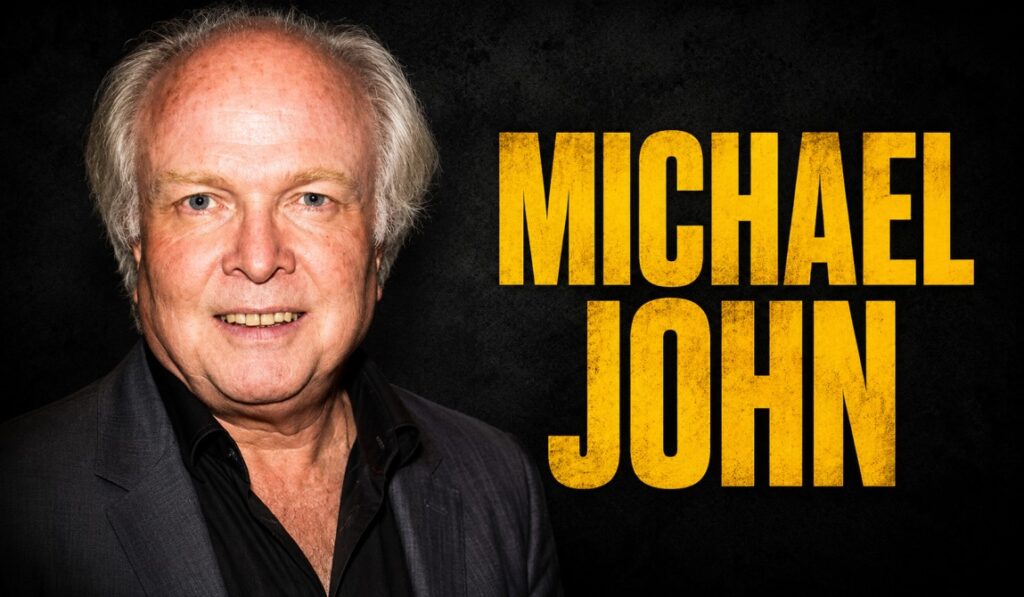
Michael John Attenborough is one of Britain’s most quietly influential theatre directors, a man whose career has shaped the landscape of UK performing arts over five remarkable decades. Son of the legendary Richard Attenborough — Oscar-winning actor and filmmaker — and the accomplished stage actress Sheila Sim, he was born into a household where creative excellence was not aspirational but expected. Yet rather than simply inheriting a cultural position, he built an entirely independent reputation through discipline, vision, and an unwavering commitment to the craft of stage direction.
What truly distinguishes Michael Attenborough from many contemporaries in British theatre is his deliberate preference for depth over visibility. While others sought headlines, he channelled his energy into rehearsal rooms, institutional boardrooms, and the patient development of emerging practitioners. His eleven-year tenure as Artistic Director of the Almeida Theatre in north London remains the defining chapter of his professional life — a period during which the venue earned international acclaim and became one of Europe’s most celebrated mid-scale stages. Through collaborative leadership, intellectual rigour, and genuine artistic generosity, he has constructed a legacy that speaks entirely through the quality of the work itself.
Quick Bio of Michael Attenborough
| Field | Details |
| Full Name | Michael John Attenborough |
| Date of Birth | 13 February 1950 |
| Place of Birth | London, England |
| Nationality | British |
| Profession | Theatre Director, Arts Administrator, Producer |
| School | Westminster School, London |
| University | University of Sussex (English graduate, 1972) |
| University Society Role | President, University Drama Society |
| Father | Richard Attenborough (actor-director) |
| Mother | Sheila Sim (actress) |
| Notable Uncle | David Attenborough (broadcaster and naturalist) |
| Most Notable Role | Artistic Director, Almeida Theatre, London |
| Years at Almeida | 2002–2013 |
| Previous Leadership Roles | Artistic Director, Hampstead Theatre (1984–89); Artistic Director, Palace Theatre Watford (1980–84) |
| RSC Role | Resident Director, Executive Producer; Principal Associate Director |
| Post-Almeida Work | Macbeth (Australia), As You Like It (Washington), Hampstead Theatre productions |
| Awards | CBE (2013), Two Honorary Doctorates, International Theatre Institute Award (2012) |
| Almeida Output | 28 premieres, 10 new versions of foreign plays, 10 plays for young people, 4 major festivals |
| West End Transfers | Multiple productions including The Herbal Bed (Broadway), Separation, My Mother Said I Never Should |
| Known For | Innovative stage productions, arts leadership, nurturing emerging talent |
| Signature Style | Balance of classical repertoire and contemporary new writing |
| Philanthropy Focus | Arts education access for young and underserved audiences |
| Agent | Rose Cobbe, United Agents, London |
Who Is Michael Attenborough?
Michael Attenborough is a British theatre director and arts administrator whose career has permanently reshaped the UK stage across more than five decades of sustained, serious work. His family name carries extraordinary cultural resonance — his father Richard Attenborough was one of Britain’s most celebrated actor-directors, and his uncle Sir David Attenborough remains the world’s most recognised natural history broadcaster — yet Michael’s standing within the performing arts was earned through his own talent, patience, and creative intelligence, not inherited through association.
As a director, his professional identity rests on a coherent and consistent philosophy: that theatre exists to challenge audiences, illuminate human experience, and forge genuine connections between the stage and the people sitting before it. This belief has guided every production he has undertaken, from Shakespearean drama and Greek tragedy to urgent new commissions by contemporary writers. His versatility across both classical text and new writing made him one of the most sought-after directors of his generation, capable of bringing equal rigour to a Chekhov revival and a world premiere.
Beyond his directorial work, Michael Attenborough has always been something more than a gifted individual practitioner. He is, at his core, a builder of theatrical communities. At every institution he has led — from the Mercury Theatre Colchester to the Almeida — he prioritised the creation of a shared creative culture, one where actors, designers, writers, and stage managers felt genuinely invested in a collective artistic mission. That collaborative leadership ethos is perhaps his most enduring professional contribution to British performing arts.
The Private Life of Michael Attenborough
In an age of relentless self-promotion and curated digital visibility, Michael Attenborough’s principled preference for privacy stands as something genuinely distinctive. He has never treated his personal life as a professional asset or a marketing opportunity. Unlike many figures of comparable standing in the arts, he has consistently declined to make his private circumstances part of his public identity — a choice that reflects not eccentricity but a clear-eyed understanding of where creative energy should actually be spent.
His personal life is grounded and settled, shaped by long-standing bonds with family and a close circle of friends drawn largely from within the arts world. He is not the kind of figure found at every industry gathering, working the room for profile or connection. His social engagements tend to be purposeful and personal — conversations with playwrights, fellow directors, and the younger generation of theatre makers who seek out his perspective and guidance.
Away from the professional sphere entirely, Michael is known to possess a deep and genuine love for literature, music, and the wider cultural landscape that continuously feeds his directing practice. These are not networking interests maintained for appearances; they are the personal nourishments that sustain a decades-long creative career. Those who know him describe a man who is warm and intellectually engaged, someone who listens far more than he speaks, and whose considered opinions carry weight precisely because they are offered selectively.
This carefully maintained discretion has, by a certain paradox, only strengthened his standing. Within the tight, discerning world of British theatre, the absence of ego and self-advertisement is noted and deeply respected. His entire reputation rests on the productions themselves — and that, in every sense, is precisely as he intends it.
Early Life and Background of Michael Attenborough
Michael John Attenborough was born on 13 February 1950 in London, England, into a household where art was not a pastime but a serious vocation. His father, Richard Attenborough, was already ascending toward the highest ranks of British screen and stage performance, while his mother, Sheila Sim, was a respected actress in her own right whose work spanned both theatre and film. Growing up in this environment meant absorbing an understanding of creative discipline and artistic ambition from the earliest age — not as abstract ideals but as the practical realities of daily family life.
From childhood, Michael showed a clear pull toward the intellectual and structural dimensions of theatre rather than its performative surface. Where his father inhabited characters in front of cameras and audiences, Michael was drawn to what lay behind the curtain — the architecture of a production, the way a text is broken open in rehearsal, the method by which a director shapes an audience’s emotional experience without ever appearing onstage. This instinct for the hidden craft of theatre direction became the defining foundation of his entire professional identity.
He was educated at Westminster School, one of London’s most prestigious independent schools, before reading English at the University of Sussex, where he graduated in 1972. At Sussex, he was not merely a student of literature but an active participant in its dramatic culture, serving as President of the University Drama Society — a role that gave him practical leadership experience alongside his academic formation. Immediately after graduating, he took up the post of Assistant Director at the University’s Gardner Centre Theatre, now renamed the Attenborough Centre for the Creative Arts in honour of the family’s enduring cultural contribution.
His early professional career was characterised by thorough, methodical progress through the British regional theatre system — the traditional training ground for the most serious practitioners of UK stage direction. Between 1972 and 1974, he served as Associate Director of the Mercury Theatre, Colchester, directing productions across both the main house and studio theatre. He then moved to the Leeds Playhouse as Associate Director from 1974 to 1979, where he directed an impressive 26 plays across five years. This remarkable output included new works by Willy Russell, Alan Bleasdale, James Robson, and Arnold Wesker, alongside major classical productions drawing on Chekhov, Shaw, and Shakespeare — a range that immediately signalled an unusually broad artistic appetite.
In 1979, he joined the Young Vic as Associate Director alongside Michael Bogdanov, directing productions including Joe Orton’s What the Butler Saw and The Merchant of Venice, before moving to the Palace Theatre, Watford where he served as Artistic Director from 1980 to 1984. Each chapter of these early years added essential depth to his artistic toolkit — a toolkit that would eventually equip him for the most significant leadership roles in British theatre.
Marriage and Partnership with Family of Michael Attenborough
Michael Attenborough’s personal life is anchored by a stable, enduring domestic partnership that has provided the steady foundation from which his exceptionally demanding professional career has been sustained over many decades. The qualities he brings to his closest personal relationships — mutual respect, genuine commitment, and a recognition that meaningful partnership requires active investment in another person’s flourishing — mirror precisely the values he carries into his professional collaborations.
His broader family context is, by any measure, extraordinary. The Attenborough family has contributed two of Britain’s most celebrated cultural figures across entirely different fields — his father Richard Attenborough transforming film and theatre, and his uncle David Attenborough reshaping the public’s relationship with the natural world through broadcasting. Growing up within this extended family network meant being surrounded by individuals who understood, at the most personal level, what it demands to dedicate a life to meaningful creative and intellectual work. That shared comprehension gave Michael a familial support structure of unusual depth.
What is particularly notable about his relationship with this remarkable family heritage is the absence of any visible burden of expectation. Rather than positioning himself as an inheritor of a cultural dynasty, he has consistently emphasised the importance of finding one’s own artistic identity independent of family association. The Attenborough name undoubtedly opened certain introductory doors — but Michael’s sustained record of achievement across more than fifty years of professional theatre makes clear that he has earned every room he has occupied through demonstrable merit.
His family life — built on privacy, shared values, and genuine personal connection — reflects the same qualities he prizes most in his professional world: loyalty, trust, and a commitment to something larger and more lasting than individual ambition.
Michael Attenborough’s Role Behind the Scenes
The true depth of Michael Attenborough’s contribution to British theatre cannot be captured by listing individual productions, however impressive that list may be. His most significant role has been that of an architect of theatrical culture — a director whose influence shapes not just what appears on stage but how an entire institution thinks, works, and develops over time.
As a director, he occupies the crucial creative space between the written text and the performed moment, translating a playwright’s vision into a living experience for an audience. His rehearsal methodology is built on two complementary qualities: rigorous intellectual preparation and genuine collaborative openness. He arrives having done the analytical groundwork on a script — its structure, its language, its subtext, its dramatic architecture — but he is emphatically not the kind of director who imposes a fixed interpretation from the outside. Instead, he creates the conditions for discovery, allowing actors to find their way into performances that feel truly inhabited rather than technically executed. This approach has made him one of the most consistently trusted and respected directors in UK theatre.
His productions at the Almeida Theatre between 2002 and 2013 represent the fullest expression of his directorial range. They included:
- The Mercy Seat by Neil LaBute
- Five Gold Rings — a new play by Joanna Laurens
- Brighton Rock — a new musical by John Barry and Don Black
- The Late Henry Moss by Sam Shepard
- Gorky’s Enemies in a new version by David Hare
- There Came a Gypsy Riding by Frank McGuinness (with Eileen Atkins and Imelda Staunton)
- Big White Fog by Theodore Ward
- Awake and Sing! by Clifford Odets
- The Homecoming by Harold Pinter
- In a Dark, Dark House by Neil LaBute
- When the Rain Stops Falling by Andrew Bovell
- Measure for Measure by Shakespeare (nominated for three Olivier Awards, winner of an Evening Standard Theatre Award)
- Through a Glass Darkly — Ingmar Bergman, adapted by Jenny Worton (transferred to New York)
- The Knot of the Heart by David Eldridge (nominated for two Olivier Awards, two Evening Standard Awards, winner of Best New Play at the Offies)
- Reasons to Be Pretty by Neil LaBute
- Filumena by Eduardo de Filippo, new version by Tanya Ronder
- King Lear — his final Almeida production, with Jonathan Pryce as Lear
Under his artistic directorship, the Almeida delivered 28 world premieres, 10 new versions of foreign-language plays, 10 productions for young audiences, and 4 major festivals — a body of institutional output that stands as a benchmark of sustained arts programming excellence.
His earlier RSC career was equally distinguished. Notable productions during his time as Resident Director and Executive Producer from 1990 onward included:
- Amphibians by Billy Roche (the Pit, 1992)
- The Changeling (Swan Theatre, 1992; transferred to the Pit, 1993)
- Two national and European tours of Les Liaisons Dangereuses
- After Easter by Anne Devlin (The Other Place, 1994)
- Pentecost by David Edgar (winner of the 1994 Eileen Anderson Award and the 1995 Evening Standard Best Play Award)
- The Herbal Bed by Peter Whelan — world premiere at The Other Place, transferred to the Duchess Theatre in the West End and subsequently to Broadway (nominated for a 1997 Olivier Award for Best Play)
- Romeo and Juliet (Pit Theatre London, 1997; Swan Theatre Stratford, international tour concluding in Verona, July 1998)
- A Month in the Country in a new version by Brian Friel (Swan Theatre, 1998; UK and international tour, 1999)
- Othello (Royal Shakespeare Theatre, 1999 Stratford Summer Festival; transferred to the Barbican Theatre)
- Henry IV Parts One and Two (Swan Theatre, 2000; transferred to the Barbican, 2001)
- The Prisoner’s Dilemma by David Edgar (The Other Place, 2001; transferred to the Pit, January 2002)
- Antony and Cleopatra (Royal Shakespeare Theatre, April 2002; transferred to the Haymarket Theatre in the West End)
His Hampstead Theatre period (1984–1989) as Artistic Director produced an extraordinary record: 33 plays staged, five transferring to the West End, one to Broadway, 23 awards won, and a nomination for the 1987 Olivier Outstanding Achievement Award. Key productions included:
- The War at Home (with Timothy West, David Threlfall, and Frances Sternhagen — transferred to Broadway; Michael nominated for Best Director in the London Theatre Critics Awards 1984)
- Particular Friendships (winner of the Thames Television Award for Best Play and Production 1985)
- Observe the Sons of Ulster Marching Towards the Somme (winner of the 1987 Time Out Theatre Award for Best Director)
- That Summer by David Edgar
- Separation by Tom Kempinski (with David Suchet and Saskia Reeves; transferred to the Comedy Theatre; nominated for three Olivier Awards)
Beyond institutional work, his freelance directing credits have taken his practice internationally, including productions of Macbeth in Australia, As You Like It in Washington DC, a national tour of Priestley’s Dangerous Corner, new plays by Rebecca Gilman and Deborah Bruce at Hampstead Theatre, the UK Premiere of Neil LaBute’s Reasons to be Happy at Hampstead, and Frank McGuinness’s Someone Who’ll Watch Over Me at the Chichester Festival Theatre.
Family Life: Raising the Next Generation of Michael Attenborough
Within his family life, Michael Attenborough brings the same considered, long-term perspective that defines his approach to theatre direction and institutional leadership. The values he has sought to cultivate in his children — intellectual curiosity, creative openness, respect for sustained effort, and a genuine sense of social responsibility — are precisely those that have guided his own remarkable development as both an artist and a leader.
Growing up within a family connected to one of Britain’s most celebrated cultural dynasties presents simultaneously extraordinary opportunities and particular pressures. Michael has been clearly conscious of both dimensions, ensuring that his children benefit from the richness of the Attenborough artistic legacy while being actively encouraged to discover and develop their own independent voices, interests, and directions. The emphasis within his household has always been on authentic personal development rather than the maintenance of any inherited identity or expectation.
The wider Attenborough family network — spanning theatre, film, broadcasting, and environmental advocacy at the highest levels — creates an exceptional context for the next generation. Continuous exposure to individuals who have committed their lives to meaningful work across multiple creative and intellectual disciplines generates an environment in which genuine ambition feels natural and excellence is understood as the product of sustained dedication rather than fortunate circumstance.
His approach to family life ultimately embodies the same philosophy that has shaped his entire professional career: that enduring value is created through patience, integrity, and genuine investment in the growth of others. Whether supporting a young actor through a difficult passage of rehearsal or nurturing the development of his own children, the underlying principles — care, honesty, and long-term thinking — remain entirely consistent.
Philanthropy and Community Engagement of Michael Attenborough
Throughout his career in arts leadership, Michael Attenborough has maintained a profound and practical commitment to a principle that might be considered radical in a commercial era: that theatre belongs to everyone. This conviction has shaped not only the programming choices he made as an artistic director but the philanthropic investments he has made with his time, expertise, and influence well beyond his formal institutional responsibilities.
During his leadership of the Almeida Theatre, he actively championed outreach and education programmes designed to bring young people — many experiencing live theatre for the very first time — into genuine contact with the performing arts. These initiatives were never treated as peripheral goodwill gestures or box-ticking exercises. They were understood as central to the theatre’s identity and mission, built on a belief that cultivating future audiences requires long-term cultural education investment, beginning years before any young person might purchase a ticket.
His advocacy for arts education has operated at both the practical and the systemic level. He has spoken with considerable force about the serious long-term cultural consequences of eroding arts provision within schools — the slow narrowing of imagination and empathy that results from treating creative disciplines as optional extras rather than fundamental components of a complete human education. This perspective has given him a respected and substantive voice in UK debates about arts funding, educational policy, and the social role of publicly supported cultural institutions.
Beyond formal institutional channels, he participates in mentoring programmes, contributes to advisory bodies, and lends his expertise to organisations working at the productive intersection of arts practice and social engagement. His philanthropic approach is consistently characterised by active, hands-on involvement rather than passive patronage — he gives time, knowledge, and genuine creative investment, not merely the lending of a recognisable name.
The Power of Privacy: Influence Without Publicity of Michael Attenborough
In a contemporary cultural landscape where visibility is routinely mistaken for significance, Michael Attenborough represents a genuinely important counter-argument. His career demonstrates with complete clarity that it is possible to shape a major art form, transform significant institutions, and inspire successive generations of practitioners — entirely without becoming a public celebrity. His influence moves through entirely different and arguably more durable channels: through the productions he has directed, the artists whose work he has shaped through mentorship, the institutional cultures he has built, and the professional standards he has modelled over fifty years of sustained engagement.
The decision to maintain a deliberately low public profile is not coincidental or accidental. It reflects a coherent and deeply held set of values about the proper allocation of a director’s attention and energy. Every hour spent on media management, personal brand cultivation, or social media positioning is an hour redirected away from the work itself — and for Michael Attenborough, the work has always come first, without exception.
His influence also spreads in ways that are notably more lasting than those generated by public positioning. Because it operates through direct personal relationships, practical mentorship, and the lived experience of working alongside him in a rehearsal room, it tends to be both more nuanced and more durable than influence rooted in visibility. Directors, actors, writers, and designers who have worked with him carry forward not just a professional example but an entire set of artistic values and working practices that continue shaping their own careers long after the collaboration has concluded.
This quiet, pervasive, and entirely intentional form of cultural influence is, arguably, the most significant dimension of Michael Attenborough’s contribution to British performing arts. He has shaped the theatre landscape not through domination but through enrichment — trusting, always, that the work will speak with more eloquence and more lasting authority than any public statement ever could.
Public Curiosity and Misconceptions About Michael Attenborough
The particular combination of a very famous surname and a deliberately private public persona creates conditions in which misunderstandings about Michael Attenborough are almost structurally inevitable. The most persistent — and most easily dismantled — misconception is that his standing in British theatre is primarily an inheritance, that the son of Richard Attenborough was always going to reach positions of institutional leadership regardless of his individual abilities. This assumption fundamentally underestimates both the fierce competitiveness of the UK performing arts industry and the extraordinary specific demands of the leadership roles he has occupied.
The position of Artistic Director of the Almeida Theatre is emphatically not ceremonial. It requires the sustained capacity to construct a diverse, ambitious, and coherent artistic programme season after season, attract world-class creative collaborators operating at the peak of their powers, manage a complex organisation under persistent financial pressure, and maintain genuine artistic credibility with both critical audiences and the broader theatre community simultaneously. Michael Attenborough performed all of these demanding functions at the highest level for over a decade — producing a body of institutional work that left the Almeida significantly stronger, more internationally recognised, and more artistically adventurous than it had been on his arrival. No amount of family connection can manufacture that kind of sustained, evidenced achievement.
A second area of misunderstanding concerns his relationship to fame and celebrity. Because he shares a surname with two of Britain’s most publicly celebrated cultural figures, some observers assume he occupies — or desires to occupy — a similarly prominent position in the public imagination. The reality is precisely the opposite: his removal from celebrity culture is sustained and deliberate. He is far from unknown within theatre and arts circles, where he is a figure of considerable respect — but he has never sought, cultivated, or welcomed the kind of broad media recognition associated with either his father or his uncle.
A third misconception, perhaps the most artistically consequential, is that a director with his background and classical training would inevitably be conservative — oriented toward the established canon and resistant to new voices. His actual programming record across more than fifty years tells an entirely different story: one defined by a genuine, consistent appetite for new writing, international work, formally adventurous commissions, and productions that actively challenge received assumptions about what British theatre can and should be.
Legacy and Future of Michael Attenborough
Michael Attenborough’s legacy within British theatre is both substantial in its documented achievements and, in keeping with the man’s own character, remarkably undersung in the broader cultural conversation. He has directed a body of work spanning five decades that encompasses an extraordinary breadth of dramatic material — from Shakespeare and Greek tragedy to urgent contemporary premieres by some of the most significant British and international playwrights of the past half century. He has led multiple major UK theatre institutions, each of which he left demonstrably stronger than he found it. He has contributed to the development of the Royal Shakespeare Company during one of its most creatively ambitious periods. And he has mentored a generation of theatre practitioners — directors, actors, writers, designers — who have gone on to shape the industry in their own right.
The Almeida Theatre’s current international reputation owes a profound and not always sufficiently acknowledged debt to the institutional foundation Michael Attenborough constructed during his tenure as Artistic Director. The culture of artistic risk-taking, collaborative ambition, and programmatic range that he established continued to define the theatre’s identity and approach well beyond his departure in April 2013 — the clearest possible evidence of genuinely lasting institutional leadership.
His formal recognition reflects, albeit partially, the scale of his contribution. He was awarded the CBE for services to theatre in June 2013. He received the Award for Excellence in International Theatre from the International Theatre Institute in April 2012. He holds Honorary Doctorates from the Universities of Leicester and Sussex, where he also serves as Honorary Professor of English. The Gardner Centre at Sussex, the institution where his professional career began, has been renamed the Attenborough Centre for the Creative Arts — a tribute to the family’s collective contribution to British cultural life.
His continuing involvement in British theatre and the performing arts beyond his Almeida tenure — through freelance directing, mentoring, advocacy, and educational engagement — ensures that his influence remains dynamically active rather than merely historical. The values he has embodied and championed across an entire professional lifetime — artistic accessibility, creative integrity, collaborative generosity, and genuine social responsibility — are arguably more urgent and more relevant to the challenges facing UK theatre today than at any previous point in his career.
His story serves as a reminder, quieter but no less powerful than any theatrical statement he has ever made, that the most enduring legacies in the arts are constructed not through self-promotion or celebrity but through genuine, sustained, humble service — to the work, to the audience, and to the generations of makers who will carry the art form forward.
Frequently Asked Questions About Michael Attenborough
Who is Michael Attenborough?
He is a distinguished British theatre director and arts administrator, best known for leading the Almeida Theatre from 2002 to 2013 and for his long association with the Royal Shakespeare Company.
When and where was Michael Attenborough born?
He was born on 13 February 1950 in London, England, into the celebrated Attenborough family, where early immersion in the performing arts set the course for his entire professional life.
What is Michael Attenborough famous for?
He is most celebrated for his transformative artistic directorship of the Almeida Theatre, during which he delivered 28 premieres, multiple West End and Broadway transfers, and numerous major awards.
Who is Michael Attenborough married to?
He keeps his personal life deliberately private; what is known is that his domestic partnership has been long-standing, stable, and a consistent source of support throughout his demanding career in British theatre.
Does Michael Attenborough have children?
Yes — he has raised his children with an emphasis on intellectual curiosity, creative engagement, and the broad cultural legacy represented by the Attenborough family’s contributions to the arts.
What is Michael Attenborough’s approach to theatre?
He combines rigorous textual preparation with genuinely collaborative rehearsal practice, championing both classical dramatic repertoire and new writing, always in service of theatre that challenges and genuinely connects with its audience.
Is Michael Attenborough involved in philanthropy?
Yes — he has been a consistent, hands-on advocate for arts education access, community theatre engagement, and the principle that live theatre should be available and relevant to all audiences, not only the privileged few.
How private is Michael Attenborough?
Profoundly so, and by firm deliberate choice — he has always directed his energy toward stage direction, mentorship, and institutional leadership rather than toward media presence or personal celebrity.
Has he received recognition for his contributions?
Absolutely — he holds a CBE (2013), the International Theatre Institute Award for Excellence (2012), Honorary Doctorates from Leicester and Sussex, and is recognised as one of the defining figures in post-war British performing arts.
What is Michael Attenborough’s legacy?
A legacy encompassing five decades of outstanding theatrical direction, the institutional transformation of the Almeida Theatre, sustained advocacy for arts access, and the mentorship of generations of practitioners across the full breadth of UK stage culture.
Conclusion
Michael John Attenborough’s life and career constitute one of the most compelling arguments in contemporary British cultural life for the enduring power of quiet, purposeful, and entirely self-effacing dedication. Born into a family of extraordinary artistic accomplishment and educated at Westminster School and the University of Sussex in the finest traditions of British literary and dramatic thought, he could have constructed a comfortable career on association and reputation alone. He chose, instead, the considerably harder and more rewarding path — building everything through the sustained quality of the work, the integrity of his leadership, and genuine service to the performing arts he has loved since childhood.
From his methodical early career through the regional theatre system to his distinguished tenure at the Royal Shakespeare Company; from his transformative artistic directorship of the Almeida Theatre to his continuing post-Almeida engagement with new writing, international directing, and arts education advocacy — every chapter reflects a coherent, deeply held set of values. Theatre matters. It belongs to everyone. Its future depends entirely on the quality of care and courage invested in the next generation of makers. Michael Attenborough has spent more than fifty years living those principles in practice. That is a legacy worthy not merely of a celebrated name but of genuine, lasting admiration.

I’m John Ilam, a content writer on AgeBioHub, focused on creating biography-based articles. I write about public figures, their life stories, careers, and personal backgrounds in a clear and simple way.
I keep my content focused on biographies so readers can easily find the information they’re looking for without confusion. My goal is to make every article informative, structured, and easy to read.