
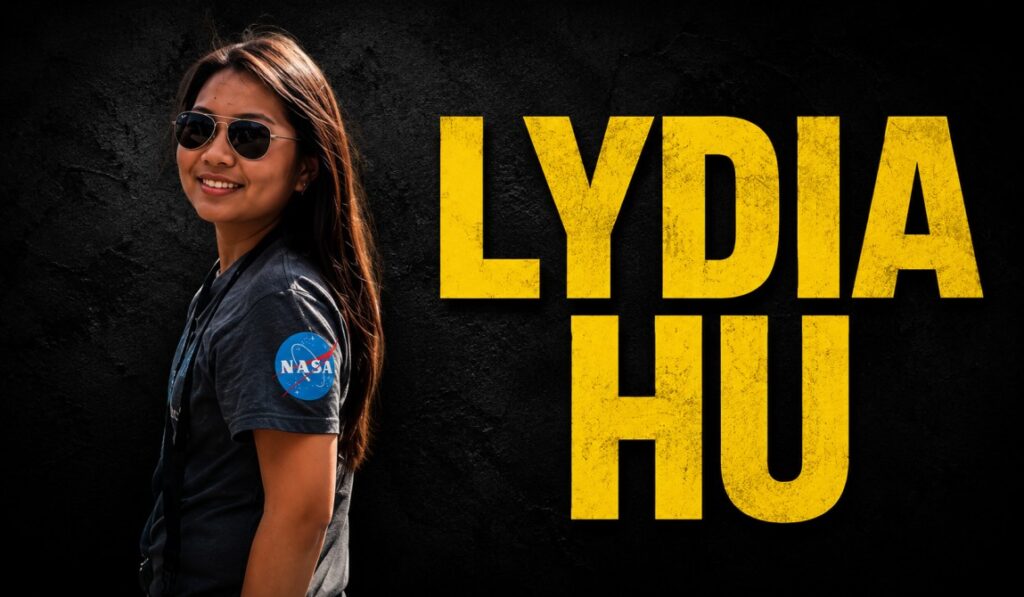
Lydia Hu is one of the most analytically sharp and professionally credentialed voices working in American financial journalism today. As a Fox Business Network correspondent who spent years inside corporate law before ever standing in front of a camera, she brings something genuinely rare to business television: the ability to read a regulatory filing the way a litigator reads evidence. Her career is not a story of luck or timing — it is a story of deliberate preparation meeting sustained ambition.
What draws people to Lydia Hu’s biography is rarely just the destination. It is the road she took to get there. She walked away from a stable, well-paying legal career to rebuild herself from scratch in a completely different industry — starting at a local Alabama television station and working her way to a national platform that reaches tens of millions of viewers. That willingness to start over, guided by purpose rather than comfort, runs through every chapter of her professional life. This complete biography covers her background, journalism career, educational credentials, net worth, salary estimates, personal life with husband Craig Haughton, and the reporting philosophy that makes her work stand apart.
Lydia Hu Personal Information
Below is a structured quick-reference profile of Lydia Hu’s key personal and professional details, drawn from publicly available biographical sources.
| Attribute | Details |
| Full Name | Lydia Shih-Ying Hu |
| Age | Early-to-mid 30s (born early 1990s) |
| Birthday | August 18 |
| Birthplace | Maryland, USA |
| Nationality | American |
| Ethnicity | Asian-American journalist |
| Height | 5 feet 6 inches (168 cm) |
| Education | JD, University of Baltimore School of Law; Undergraduate, University of Maryland |
| Profession | Business Correspondent, Broadcast Journalist |
| Current Employer | Fox Business Network (FBN) |
| Marital Status | Married |
| Spouse | Craig Haughton (Morgan Stanley Executive) |
| Children | Two — daughter Everleigh (August 2019), son (September 2022) |
| Net Worth (2025) | $1 million – $5 million (estimated) |
| Annual Salary | $134,000 – $200,000 |
| Awards | Multiple Emmy Awards, including two New York Emmy Awards |
Who Is Lydia Hu? Background and Early Life
Lydia Hu is an Emmy Award-winning American journalist, Fox Business Network national correspondent, and former corporate law practitioner whose professional arc defies the standard media industry biography. She was born and raised in Maryland inside an Asian-American household where intellectual achievement, cultural identity, and disciplined effort were not occasional expectations — they were the baseline. Her parents, Stanley Hu and Elizabeth Hu, built a home environment where curiosity was rewarded and hard work was treated as a given, not a virtue to be praised.
From her earliest years, Lydia demonstrated a pull toward communication and public discourse. She participated actively in school newspapers, joined debate competitions, and developed a comfort with public speaking that would later translate directly into broadcast journalism confidence. These formative experiences were not accidental résumé items — they were early signals of where her instincts naturally pointed.
Her multicultural background added a dimension to her worldview that pure academic training could never supply. Growing up navigating multiple cultural identities gives a person a particular sensitivity to how systems — economic, legal, institutional — affect communities differently depending on where those communities sit in the social hierarchy. That sensitivity shows up consistently in how she frames economic policy analysis and consumer advocacy journalism: always connected to real human circumstances rather than floating in abstraction.
The single most defining characteristic of Lydia Hu’s early professional formation, however, is that she chose corporate law before she chose journalism. She spent years learning how businesses actually function — not through reporting on them, but from inside the legal machinery that governs them. When she eventually crossed into broadcast journalism, she did not arrive as an outsider learning the subject. She arrived as someone who already knew it from a perspective most journalists never access.
Lydia Hu’s Education and Legal Career Background
The professional foundation Lydia Hu built before entering television newsrooms is genuinely unusual in American financial media. Her academic path was sequential and purposeful, with each credential building practical value that would compound across the career transitions ahead.
Academic Foundation
Lydia earned her undergraduate degree from the University of Maryland, concentrating on communications and media studies. That program introduced her to the structural principles of storytelling, audience psychology, and media ethics — foundational knowledge she would apply years later in live broadcast environments under real deadline pressure.
From Maryland, she pursued advanced legal education at the University of Baltimore School of Law, completing her Juris Doctor degree with magna cum laude distinction. This was not a routine academic performance. Graduating near the top of her class at a law school demands the ability to synthesize complex regulatory material under sustained pressure, communicate with precision under constraints, and develop systematic analytical habits that hold up when the stakes are real. Every single one of those demands maps directly onto the skills that define an exceptional investigative reporter.
Her legal education gave her fluency with regulatory language, comfort inside complex compliance frameworks, and a document-analysis instinct that most broadcast journalists simply do not develop. These are not soft advantages — they create measurable differences in the depth and accuracy of reporting on corporate and financial subject matter.
Corporate Law Practice
After completing her bar examination, Lydia entered corporate law practice in Baltimore, where she worked for approximately five years. Her professional focus during this period covered business transactions, regulatory compliance matters, and corporate governance — the exact categories of subject matter she now covers daily as a national correspondent.
This professional chapter gave her knowledge that no journalism curriculum provides: a genuine insider understanding of how corporations structure decisions under regulatory scrutiny, how legal language functions as both a tool of clarity and a mechanism of strategic ambiguity, and how executives think when compliance pressure intersects with business objectives. When she later began reporting on Securities and Exchange Commission enforcement actions and financial misconduct investigations, she was not learning those frameworks on the job — she had already worked inside them.
Her legal practice also sharpened a skill that proves invaluable in investigative work: reading official documents not just for what they say, but for what they deliberately omit. Regulatory filings, merger disclosures, and shareholder communications contain gaps and qualifications that trained legal readers recognize immediately. Lydia reads those documents fluently. That fluency is difficult for competitors to replicate regardless of experience.
Career Transition to Journalism
Choosing to leave a stable, premium-compensated legal position for entry-level broadcast journalism required more than career confidence — it required a clear conviction that the value she could deliver through journalism exceeded what she was contributing through law. She understood that her particular combination of legal analysis expertise and communication instincts addressed a genuine gap in financial media: business stories were being reported accurately but not deeply, with legal and regulatory dimensions routinely flattened or ignored entirely.
The transition itself was not smooth. She had to develop on-camera presence, learn live television production rhythms, rebuild professional credibility in a completely different industry, and prove herself through smaller markets before accessing larger platforms. That process of disciplined reinvention — starting over with humility but without surrendering ambition — is a thread that runs through her entire professional story.
Lydia Hu’s Journalism Career Journey
Lydia Hu’s path through the broadcast journalism industry followed a clear upward structure: foundational training in a local market, investigative recognition in a regional powerhouse, and then national prominence at one of the most-watched business news networks in the country. Each stage was necessary. None was skipped.
Early Career at WBRC-TV
Lydia’s television career began at WBRC-TV, a CBS affiliate operating in the Birmingham, Alabama market. For a journalist arriving from a corporate law background with no prior on-camera experience, a local affiliate placement is exactly the right starting environment — demanding enough to force real skill development, structured enough to allow iterative improvement.
Her assignments at WBRC-TV ranged widely: breaking news coverage, community reporting, agriculture journalism, and local business developments. That breadth was formative. Business correspondents who have only ever covered financial markets often struggle to connect economic narratives to everyday human experience. Local reporting taught Lydia to make that connection instinctively. She learned to work quickly under unpredictable live conditions, build source relationships from scratch, and translate complex information for general audiences — the unglamorous fundamentals that separate genuinely reliable broadcast journalists from those who simply look comfortable on camera.
She also won the Best in Broadcasting award in 2017 from the Alabama Broadcasters Association during this period — early industry recognition that her approach was resonating beyond the newsroom.
Growth at Spectrum News
Career advancement brought Lydia to Spectrum News NY1, one of the most competitive and editorially rigorous regional news operations in the United States. The New York City media environment is categorically different from smaller markets — the pace is faster, the sources are more guarded, the stories are more consequential, and the audience expectations are considerably higher.
At Spectrum News, she deepened her investigative journalism capabilities and committed more fully to business and economic coverage. The results were substantive and recognized. She earned her first New York Emmy Award for her documentary work on the New York City Opioid Battle — a complex, multi-layered public health and economic story that required exactly the kind of regulatory and institutional knowledge her legal background provided. Her second New York Emmy Award came for her COVID-19 coverage in the segment Lives Lost: Saying Goodbye — emotionally demanding journalism that required equal parts human sensitivity and factual rigor.
Emmy recognition in New York carries significant professional weight. It is not merely an award — it is peer validation from the most competitive television market in the country, confirming that her legal-journalism hybrid approach produces work that stands at the top of the craft.
She also received recognition during this period from the Associated Press and the Silurians Press Club — further validation from journalism organizations that evaluate investigative reporting standards and editorial excellence.
Joining Fox Business Network (FBN)
In February 2021, Lydia Hu joined Fox Business Network as a national correspondent based in New York City. This transition represented the culmination of years of deliberate, sequential career-building — bringing her to a platform with a national audience, access to the country’s most significant business stories, and the resources to pursue long-form investigative journalism alongside daily breaking news coverage.
At FBN, her beat spans energy markets, agriculture reporting, real estate journalism, travel, and financial regulatory coverage. Her day-to-day work mixes field reporting, studio appearances, live breaking news segments, and structured investigative projects. She conducts on-location interviews with Fortune 500 executives, economists, and federal policy officials — conversations that are consistently more substantive than standard media exchanges because she arrives having examined the underlying documents before the cameras roll.
Lydia Hu’s Role and Achievements at Fox Business Network
Fox Business Network gave Lydia Hu a national stage proportionate to the expertise she had spent years accumulating. Her work at FBN is notable both for its editorial range and for the consistent analytical depth she brings regardless of the story format or subject category.
Key Reporting Areas
Lydia’s coverage at Fox Business Network spans several distinct and demanding areas of financial and regulatory journalism, each benefiting directly from her legal training:
Corporate Investigations — Her examination of financial misconduct, executive accountability, and regulatory enforcement failures draws on the same document-analysis skills she developed during her years in corporate law practice. She interprets SEC filings and enforcement actions with a precision that general assignment reporters rarely achieve because they lack the foundational legal literacy to recognize what the documents actually mean.
Economic Policy Analysis — She translates Federal Reserve communications, Treasury policy shifts, inflation data, and fiscal legislation into actionable explanations for ordinary viewers. Economic jargon is a genuine barrier to public understanding, and bridging that barrier without sacrificing accuracy requires subject-matter depth, not just communication skill.
Financial Markets Reporting — She covers earnings seasons, market volatility events, and macroeconomic trend analysis, consistently connecting broader market movements to household financial planning implications that make the information relevant to viewers’ actual lives.
Regulatory Compliance Coverage — Drawing directly on her JD credentials, she explains how corporate governance frameworks function, where enforcement gaps exist, and what regulatory changes mean for businesses and consumers at a practical level.
Agriculture and Energy Sectors — These beats are frequently underserved by business journalists who gravitate toward Wall Street narratives. Lydia’s coverage of commodity markets, energy infrastructure, and agricultural economics gives her portfolio a breadth that reflects genuine intellectual range.
Notable Coverage and Investigations
Lydia Hu’s most consequential journalism has come through sustained investigative commitment rather than viral single-story moments. Her COVID-19 pandemic reporting placed her physically inside New York City hospital environments at the peak of the crisis — covering frontline healthcare workers, small business devastation, and the mechanics and failures of federal relief programs. This required physical presence in environments most people were urgently avoiding, demonstrating the public service commitment that defines her professional identity.
Her opioid crisis documentary work at Spectrum News — recognized with a New York Emmy Award — examined the intersection of pharmaceutical regulatory compliance failures, corporate accountability gaps, and human community destruction, synthesizing legal, economic, and narrative dimensions that most single-beat reporters struggle to hold simultaneously.
Her Fortune 500 CEO interview work is also consistently notable. Executives who sit across from Lydia Hu encounter a journalist who has read the filings, understands the regulatory context, and declines to soften questions when the underlying evidence does not support corporate framing. She extracts more substantive information from these conversations than less-prepared interviewers consistently achieve.
Emmy Awards and Industry Recognition
Lydia Hu has earned multiple Emmy Awards across her journalism career, anchored by two New York Emmy Awards from her Spectrum News tenure — one for the opioid crisis documentary and one for COVID-19 investigative reporting. Emmy recognition in the New York market carries substantial professional weight within broadcast industry circles.
Beyond Emmy recognition, her journalism has been honored by the Associated Press, the Silurians Press Club, and the Alabama Broadcasters Association — a cross-section of industry organizations that evaluate different dimensions of broadcast excellence, from technical production quality to investigative methodology to community service impact.
Is Lydia Hu Married? Personal Life with Craig Haughton
Lydia Hu’s personal life is managed with the same intentionality she applies to her professional work — thoughtful, values-grounded, and deliberately protected from the kind of public overexposure that characterizes much of modern media culture.
Marriage to Craig Haughton
Lydia Hu is married to Craig Haughton, a senior finance professional at Morgan Stanley specializing in wealth management. The couple were married on September 22, 2012, in Baltimore, Maryland — the city where Lydia had practiced law and where both of their professional trajectories were still taking shape.
Their partnership is frequently characterized as a natural intellectual pairing: a financial journalist and a wealth management executive whose professional expertise intersects even when their daily work unfolds in separate environments. Craig Haughton’s depth of knowledge in investment strategy, portfolio management, and financial markets almost certainly enriches the quality of Lydia’s economic reporting in ways that are difficult to quantify but easy to understand intuitively.
As an interracial couple — Lydia’s Asian-American heritage alongside Craig’s background — they reflect the kind of modern American partnership that transcends social barriers previous generations navigated with considerably more difficulty. Lydia’s own parents formed an interracial marriage during a period when such relationships faced real social friction, particularly in Virginia, and that family precedent clearly shaped her own understanding of what meaningful partnerships look like when built on shared values rather than social convenience.
The couple maintains deliberate privacy around their relationship. They do not appear regularly together at media events, do not use each other’s professional platforms for personal content, and have drawn clear boundaries between their public profiles and their shared private life — a choice that is increasingly rare in media culture and arguably healthier for it.
Family Life and Children
Lydia and Craig welcomed daughter Everleigh in August 2019, and a son in September 2022. They now raise two young children while simultaneously managing demanding national-level careers — a work-life balance challenge that working parents across industries recognize immediately as both relentless and rewarding.
Lydia has been candid about the practical realities of balancing motherhood with national correspondent responsibilities. Live television demands, unpredictable breaking news schedules, travel assignments, and the rhythms of a toddler’s school day do not naturally complement each other. Her willingness to discuss this tension honestly has made her genuinely relatable to millions of viewers who navigate similar contradictions between career ambition and parental presence.
Her approach to her children’s public exposure is firm and consistent: she does not share their images on professional platforms, does not incorporate their personal stories into her media identity, and draws a clear line between the public figure she has chosen to be and the private family life her children have not chosen to enter. That boundary reflects sound parenting judgment and a mature understanding of what sustained public attention actually does to people who have not elected it.
Lydia Hu’s Net Worth and Salary Breakdown
Precise financial data on individual journalists is rarely publicly disclosed, but based on industry compensation benchmarks, career trajectory analysis, and comparable correspondent profiles, reasonable estimates of Lydia Hu’s net worth and income picture are possible.
Net Worth Estimation (2025)
Lydia Hu’s net worth in 2025 is estimated to fall between $1 million and $5 million. This range reflects cumulative earnings across multiple income periods: approximately five years of corporate law practice at above-average compensation levels, progressively higher journalism salaries across three career stages, her current Fox Business Network correspondent position, and the wealth-building advantages of a dual high-income household with a Morgan Stanley wealth management executive.
The upper range of this estimate is supported by several converging factors. Legal practice salaries in Baltimore during her tenure were well above national averages for early-career professionals. Each of her journalism career transitions brought salary increases. Her Emmy Award-winning profile generates supplementary income streams that accumulate over time. And her husband’s professional background in investment strategy and portfolio management means their household financial planning operates at a level of sophistication most families cannot access.
Annual Salary and Income Sources
Lydia Hu’s base compensation at Fox Business Network is estimated between $134,000 and $200,000 annually — a range that reflects her standing as an experienced, Emmy-recognized correspondent with specialized legal analysis credentials that command premium compensation relative to general assignment reporters.
| Income Source | Estimated Annual Amount |
| FBN Base Salary | $134,000 – $200,000 |
| Speaking Engagements | $10,000 – $50,000 |
| Investigative & Special Reports | $15,000 – $25,000 |
| Media Appearances & Panels | $5,000 – $10,000 |
| Total Estimated Annual Income | $164,000 – $285,000 |
Speaking engagements represent a particularly meaningful supplementary income channel for journalists at her career level. Business conferences, law school panels, corporate media training programs, and journalism education events all seek credentialed speakers with Lydia’s specific profile — dual expertise in law and broadcast journalism is a rare combination that commands premium speaker fees at events operating at the intersection of legal compliance and financial communications.
Wealth Building Factors
Several structural advantages accelerate Lydia Hu’s long-term wealth accumulation beyond her annual income figures. Her household operates with two high-earning professionals in complementary disciplines, with the financial literacy that combination implies. Craig Haughton’s Morgan Stanley background means their investment portfolio, tax strategy, and retirement planning are almost certainly managed with institutional-grade sophistication.
Her Emmy Award recognition also functions as a career asset with direct financial implications. Award-winning correspondents negotiate from stronger positions, command higher speaking fees, and attract more competitive contract offers when career opportunities arise. Industry recognition, in practice, is not merely honorific — it compounds financially over the years that follow.
Her own legal background in corporate law gives her financial planning advantages that most journalists lack entirely. She understands how corporate structures affect tax treatment, how regulatory frameworks govern investment vehicles, and how professional compensation structures can be organized for maximum long-term accumulation. These are not small advantages in a career that spans multiple decades.
Lydia Hu’s Height, Physical Appearance, and On-Camera Presence
Television journalism rewards substantive expertise, but it also operates within a visual medium where on-screen presence and professional presentation carry real weight in how audiences receive and trust the information being delivered.
Physical Attributes
Lydia Hu stands at approximately 5 feet 6 inches tall — a height that presents naturally on camera across the range of formats she works in, from solo field reporting to multi-anchor studio discussions. Her physical bearing on screen reads as composed and authoritative, qualities that matter particularly in financial news coverage, where viewer confidence in the correspondent partly determines how seriously the information is received.
Her wardrobe approach reflects a carefully calibrated balance between professional authority and audience approachability. She tends toward tailored blazers, structured dresses, and polished separates in professional colorways — presentation choices that signal credibility and preparation without creating an austere distance from the viewers she is addressing. In business journalism specifically, visual tone matters: too formal and the story feels inaccessible; too casual and the seriousness of the material gets undermined. Lydia threads this calibration consistently and effectively.
On-Camera Presence and Presentation Style
The most distinctive quality of Lydia Hu’s on-camera performance is the specific character of the confidence she projects. It is not the performed ease that broadcast training produces — it is the settled assurance of someone who genuinely knows the subject being discussed. When she is explaining a regulatory enforcement action or walking through the implications of a corporate restructuring, audiences register — often without consciously articulating it — that her confidence is substantive rather than stylistic.
Her communication style consistently prioritizes clarity over impressiveness. She does not deploy financial jargon as a credibility signal; she uses plain language as a demonstration of genuine comprehension. This is a harder editorial discipline than it sounds. Accurately restating complex regulatory concepts in accessible everyday language requires understanding them deeply enough to reframe them without distorting them. Lydia does this reliably.
Her interview approach is measured and genuinely attentive. She processes responses before formulating follow-up questions rather than moving mechanically through a prepared list — a quality that produces noticeably more substantive exchanges and that sources and executives respond to differently than they do to less patient interviewers.
Lydia Hu’s Reporting Style and Journalistic Approach
Every serious journalist develops a working methodology — a set of consistent habits, source relationships, and editorial values that shape how they pursue and present stories. Lydia Hu’s approach is distinctive, recognizable across different story types, and directly traceable to the professional formation she received before entering the newsroom.
Investigative Journalism Methodology
Lydia approaches investigative reporting the way a corporate attorney approaches a complex case: systematically, with primary documents at the center, and with rigorous discipline about distinguishing what can be established from what is merely alleged. Her process begins with direct source examination — SEC enforcement documents, regulatory filings, corporate disclosures, shareholder communications — materials that most journalists treat as supplementary background but that Lydia treats as the foundation of the story itself.
Her source development practices reflect her legal background in a different way. Years inside corporate law gave her access to a professional community — compliance officers, regulatory officials, corporate insiders, legal analysts — who speak differently to journalists they trust to handle sensitive information responsibly and accurately. Lydia’s reputation for legal precision and editorial fairness has cultivated source relationships that produce deeper, more reliable information than standard journalist-source arrangements generate.
Her investigative work maintains a consistent commitment to connecting institutional narratives to individual human impact. Abstract stories about corporate governance failures or regulatory enforcement gaps become meaningful journalism when viewers understand what those failures cost real people in retirement security, healthcare access, job stability, or housing affordability. Lydia builds those connections not as emotional manipulation but as accurate reporting of dimensions that are genuinely part of the underlying story.
Unique Value Proposition
The clearest answer to what distinguishes Lydia Hu from other business correspondents is also the most straightforward: almost none of them hold a Juris Doctor and practiced corporate law before entering broadcasting. That combination is rare enough in financial journalism to function as a genuine category differentiation rather than a marginal credential advantage.
This background creates specific, measurable reporting advantages. She evaluates corporate statements with the skepticism of someone who understands how they are legally constructed. She identifies what is missing from regulatory disclosures as readily as she analyzes what is present. She conducts Fortune 500 CEO interviews with the informed skepticism of someone who has sat on the other side of strategic corporate communication. And she explains the complexity — the legal stakes, the regulatory implications, the human consequences — in language that respects audience intelligence without condescending to it.
Lydia Hu’s Impact on Financial Journalism
Individual journalists who operate at the highest level of their field inevitably shape the standards around them — through the stories they break, the methods they model, and the expectations they raise in audiences who come to understand what rigorous reporting actually looks like.
Raising Standards for Business Reporting
Lydia Hu’s sustained presence in national financial media has quietly raised expectations for what business correspondents should know before they report. Her success demonstrates something important: audiences are capable of engaging with genuine complexity when it is presented with clarity and respect, and they will actively seek out journalists who treat them as intelligent participants in civic life rather than passive recipients of simplified content.
Her approach to corporate governance coverage and regulatory compliance reporting has provided a practical model for what business journalism looks like when the correspondent brings genuine subject-matter expertise rather than general reporting competence. The difference is visible in the questions asked, the documents examined, the sources cultivated, and the precision with which regulatory and legal frameworks are explained.
Her Emmy-winning documentary and investigative journalism work has also demonstrated, in concrete terms, that long-form investigative content is both viable and valuable within a television format that typically privileges speed and volume over depth and accountability.
Viewer Trust and Industry Recognition
In journalism, trust is the primary professional asset — the accumulated result of sustained accuracy, consistent fairness, and genuine knowledge demonstrated across years of public reporting. Lydia Hu has built considerable viewer trust through precisely this mechanism: not through personal charm or production polish, but through being repeatedly right and reliably fair about complex, consequential stories.
Her Emmy Award recognition represents industry peer validation from the most competitive television environment in the United States. Recognition from the Associated Press and the Silurians Press Club adds additional layers of institutional credibility from organizations that evaluate different dimensions of journalism quality. Together, these honors position her consistently among the most credible business journalists currently working in American television.
Lesser-Known Facts About Lydia Hu
Biographical profiles of prominent journalists often focus narrowly on career titles and award counts. Several details about Lydia Hu’s story are less widely covered but add meaningful texture to the fuller picture.
Interesting Career Details
Her parents formed an interracial marriage during a period when such relationships faced considerably more institutional and social resistance — particularly in Virginia, where they lived. This family history gave Lydia an early and personal understanding of how identity intersects with systems, institutions, and public attitudes in ways that shaped how she approaches coverage of communities that sit outside dominant cultural narratives.
She reported from inside New York City hospitals during the acute COVID-19 pandemic period — not remotely, not through official briefings, but through physical presence in clinical environments where the crisis was happening in real time. That choice reflected a commitment to public service journalism that goes beyond professional obligation.
Her five years in Baltimore corporate law practice were not a detour that delayed her journalism career. They were the most important preparation she could have received for it — providing a form of institutional knowledge about how corporations, regulators, and legal systems interact that no journalism training program delivers.
She navigated not two but three major professional identity transitions — from attorney to local television reporter, from local reporter to regional investigative correspondent, from regional correspondent to national broadcast journalist — each requiring her to rebuild credibility in a new professional context while leveraging what the previous context had given her.
Her Alabama Broadcasters Association Best in Broadcasting award in 2017 came early in her television career, indicating that the qualities that would later earn her New York Emmy Awards were visible and recognized from the beginning of her broadcast work.
She has built a meaningful social media presence on platforms including Instagram and Twitter (@lydiahunews), using digital channels to share behind-the-scenes content, reporting updates, and authentic professional perspective — extending her audience engagement and personal brand beyond the television broadcast window.
Personal Interests and Values
Lydia Hu’s public statements and professional decisions consistently point to a stable set of underlying values, even when she keeps personal details deliberately private. Lifelong education sits at the center of her personal philosophy — not as a completed achievement but as an ongoing discipline. She pursued a law degree after completing undergraduate studies, and her reporting consistently reflects the kind of continuous learning that legal and financial subject matter demands.
Her approach to work-life integration reflects genuine conviction that demanding professional careers and meaningful family life are compatible — but only through intentional structure, clear boundaries, and the kind of mutual professional support that her partnership with Craig Haughton appears to provide in practice. Her commitment to shielding her children from public exposure reflects a clear-eyed assessment of what sustained media attention actually means for people who have not chosen public life.
Her Asian-American cultural heritage is a genuine source of identity rather than a demographic label she carries passively. It informs the perspectives she brings to economic community impact reporting and her instinct to seek diverse sources and viewpoints in business narratives that might otherwise reproduce a narrow range of voices.
FAQs
What is Lydia Hu’s current age?
Lydia Hu was born on August 18 in the early 1990s, making her in her early-to-mid 30s, with a Leo zodiac sign — though some sources estimate an older birth year based on her career timeline.
How much does Lydia Hu earn at Fox Business Network?
Her annual base salary at FBN is estimated between $134,000 and $200,000, with total income potentially reaching $285,000 annually when speaking engagements, panel appearances, and special investigative projects are factored in.
When did Lydia Hu join Fox Business Network?
She joined Fox Business Network as a national correspondent in February 2021, operating out of New York City.
How many Emmy Awards has Lydia Hu won?
She has earned multiple Emmy Awards, including two New York Emmy Awards from her Spectrum News NY1 tenure — one for her opioid crisis documentary and one for her COVID-19 investigative segment Lives Lost: Saying Goodbye.
Where did Lydia Hu work before Fox Business Network?
She worked at Spectrum News NY1 in New York and before that at WBRC-TV in Birmingham, Alabama. Prior to television journalism, she practiced corporate law in Baltimore for approximately five years.
Does Lydia Hu have children with Craig Haughton?
Yes — daughter Everleigh, born in August 2019, and a son born in September 2022. Both children are kept deliberately out of the public spotlight.
What is Lydia Hu’s educational background?
She holds a Juris Doctor from the University of Baltimore School of Law, where she graduated magna cum laude, and an undergraduate degree from the University of Maryland with a focus on communications and media studies.
Key Takeaways
Lydia Hu’s professional story is built on a foundation that is genuinely rare in American broadcast journalism, and understanding it fully requires looking at the full arc rather than just the current title. Here are the core points that define her biography:
Her dual professional background — corporate law practice followed by broadcast journalism — is the foundational differentiator that separates her reporting from what most financial media correspondents can produce. The JD from the University of Baltimore School of Law, earned magna cum laude, followed by five years of active legal practice, gave her document-analysis instincts and regulatory fluency that no journalism training program replicates.
Her Emmy Award record — including two New York Emmy Awards for documentary and investigative work — represents peer validation from the most competitive television market in the United States, confirming that her legal-journalism hybrid approach produces broadcast journalism of the highest craft standard.
Her career trajectory moved deliberately from WBRC-TV in Alabama through Spectrum News NY1 to Fox Business Network, with each stage building specific, necessary competencies rather than simply accumulating titles.
Her net worth in 2025 is estimated between $1 million and $5 million, reflecting cumulative legal career earnings, progressive journalism salary growth, supplementary income from speaking engagements and special reports, and the compound advantages of a dual high-income household with Morgan Stanley executive Craig Haughton.
Her family life — centered on husband Craig Haughton and children Everleigh and her son born in 2022 — is managed with consistent intentionality, with clear and firm boundaries between her public professional persona and her private family world.
Her influence on financial journalism standards extends well beyond individual stories, providing a working model of what business reporting looks like when correspondent expertise is deep rather than broad.
Conclusion
Lydia Hu’s biography ultimately tells a story about what is possible when professional preparation is as deliberate as professional ambition. She did not arrive at Fox Business Network by accident or by a single fortunate break. She built toward it across years of legal training, corporate law practice, local television work, and regional investigative journalism that earned real, competitive recognition in genuinely demanding environments.
At FBN, she occupies a position that financial journalism genuinely needs: a national correspondent who approaches corporate investigations, regulatory compliance stories, and economic policy analysis with the insider knowledge of a trained attorney and the communication instincts of a seasoned broadcaster. That combination is not merely additive — it produces a qualitatively different kind of journalism from what either background alone would generate.
Her personal life — a marriage built on shared professional respect and genuine partnership with Craig Haughton, two children raised with careful privacy protections, and a family history shaped by multicultural resilience and interracial partnership — adds human depth to a public figure whose profile might otherwise reduce to credentials and awards.
As economic complexity grows, as financial markets become more volatile, and as the gap between institutional decision-making and public understanding continues to widen, journalists like Lydia Hu become more consequential, not less. She is the kind of correspondent that rigorous business journalism is built around: legally literate, editorially fair, deeply prepared, and genuinely committed to the public service function that serious reporting has always been meant to serve.

I’m John Ilam, a content writer on AgeBioHub, focused on creating biography-based articles. I write about public figures, their life stories, careers, and personal backgrounds in a clear and simple way.
I keep my content focused on biographies so readers can easily find the information they’re looking for without confusion. My goal is to make every article informative, structured, and easy to read.