
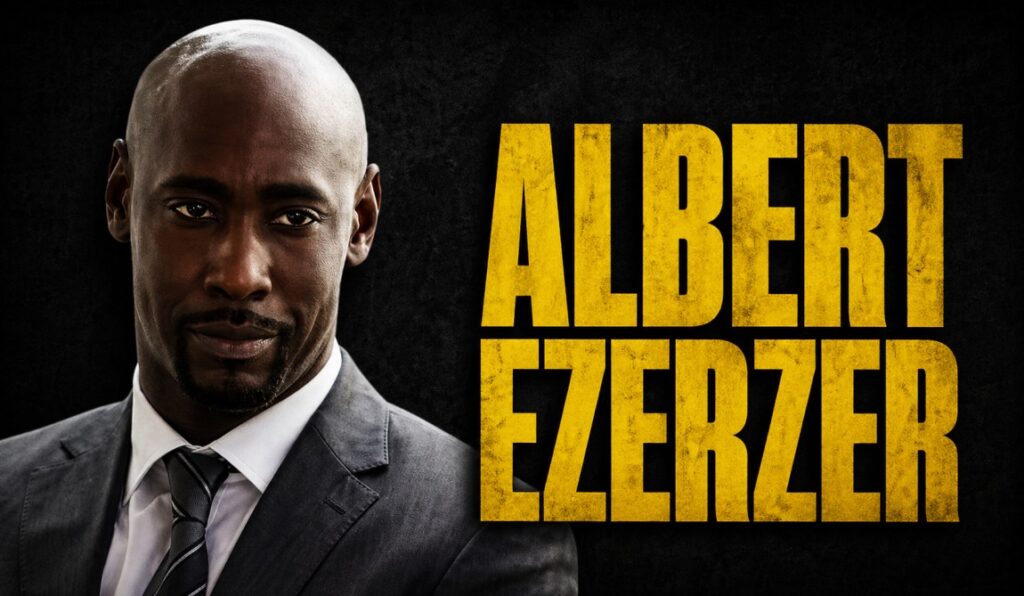
Albert Ezerzer never appeared on screen, yet his name became one of the most searched terms among Suits fans after a quiet dedication card flashed at the end of a season premiere. Viewers paused. They rewound. They typed his name into search bars by the thousands. Who was this person? Was he an actor? A producer? Someone connected to the cast in a meaningful way?
The answer is both simpler and far more moving. Albert Ezerzer was a transportation crew member — a man who worked in the background of a beloved television show, kept the wheels of production turning, and left behind colleagues who cared enough to tell the world his name. His sudden death in May 2014 triggered an outpouring of grief from the Suits family and a memorial dedication card that introduced millions of viewers to a side of the entertainment industry they rarely think about.
This article covers his complete story — his life, his career, his cause of death, and why the mistaken identity confusion with actor D.B. Woodside still circulates online today.
Quick Bio of Albert Ezerzer
| Fact | Details |
| Full Name | Albert Ezerzer |
| Nickname | Al |
| Profession | Transportation Department Worker / Film Crew Member |
| Industry | Film and Television Production |
| Famous For | Memorial tribute card in Suits Season 4 Premiere |
| Date of Birth | January 31, 1959 |
| Birthplace | Los Angeles, California, USA |
| Ethnicity | African-American |
| Date of Passing | May 9, 2014 |
| Age at Passing | 55 Years |
| Cause of Death | Ruptured Aortic Aneurysm |
| Years Active | 1993 – 2014 |
| Notable Projects | Family Pictures, Interstate 60, Tart, Covert One: The Hades Factor, Suits |
| Role on Suits | Transportation Department Crew Member |
| Tribute Episode | Season 4, Episode 1 — aired June 11, 2014 |
| Wife | Rachel Ezerzer |
| Nationality | American |
| Legacy | Respected behind-the-scenes professional honored for crew dedication and on-set professionalism |
Who Was Albert Ezerzer?
Albert Ezerzer was a behind-the-scenes crew member who spent his professional life supporting film and television productions in ways that audiences never directly witness but absolutely depend on. Born on January 31, 1959, in Los Angeles, he built his entire career around production logistics — coordinating the movement of cast members, crew, and equipment so that every shooting day started on time and ran without disruption.
He joined the Suits production team in 2011 when the show first launched on USA Network, and he remained a consistent presence on set through three full seasons until his passing in May 2014. While he never stepped in front of a camera, those who worked alongside him every day described him as a dedicated, warm, and deeply respected member of the below-the-line workforce. His contribution was exactly the kind that goes unnoticed only when it fails — when it functions correctly, no one comments, but the entire production benefits.
When Albert died unexpectedly at 55, his colleagues chose not to process that grief privately. They honored him publicly, on screen, in front of millions of viewers — and in doing so, introduced the world to a man whose name genuinely deserved to be remembered.
Albert Ezerzer Age
Albert Ezerzer was 55 years old when he passed away on May 9, 2014, having been born on January 31, 1959, in Los Angeles, California. By that stage of his life, he had accumulated more than two decades of hands-on experience across the film and television industry, working through various productions before finding his most sustained professional home on the Suits set in Toronto.
At 55, Albert was not winding down. He was actively showing up every day, contributing to a production that relied on him as part of its core below-the-line crew. That is precisely what made his sudden death so jarring for those who knew him. He was not a man whose passing felt distant or anticipated. He was a colleague present just days before, doing exactly what he had always done, and then suddenly gone without warning.
His age carries a quieter weight too. Fifty-five years lived almost entirely out of public view, dedicated to work that rarely earns applause from the people watching at home. The Suits tribute ensured those 55 years would not pass without acknowledgment.
Early Life of Albert Ezerzer
The early chapters of Albert Ezerzer’s life are not well documented in public records, which reflects a broader reality about below-the-line production workers rather than anything unusual about Albert specifically. He was born on January 31, 1959, in Los Angeles, California — a city whose entire economic and cultural fabric has long been shaped by the entertainment industry — but details about his childhood, family background, and education remain largely private.
Transportation coordinators, drivers, and film crew workers at this level of the industry typically have no publicists managing their image, no agents crafting their public narrative, and no entertainment journalists following their personal stories. They work, and their work speaks for itself within the professional circles that depend on it.
What is known is that Albert entered the film and television industry in 1993 with his first documented credit on Family Pictures, and spent the following two decades steadily building a reputation as a reliable and genuinely professional member of every production team he joined. By 2011, that reputation had placed him on Suits — where he would remain for the rest of his working life.
Albert Ezerzer’s Connection to Suits
Albert Ezerzer’s professional relationship with Suits began in 2011 when the legal drama launched its first season, and it continued without interruption until his death three years later. He served in the transportation department — a division of production that carries far more operational weight than its title suggests. On an active television set, transportation crew members are responsible for moving principal cast, day players, producers, and equipment between hotels, production offices, and filming locations, often managing overlapping schedules that shift with little notice.
Suits filmed primarily in Toronto, and keeping pace with that city’s geography while maintaining a demanding production schedule required someone dependable, organized, and genuinely professional. Albert was all of those things across three full seasons. He was not a background figure who appeared occasionally — he was a daily presence that the cast and production staff relied on.
When he died in May 2014, creator Aaron Korsh made a deliberate choice. Rather than absorbing the loss quietly within the production, he ensured that the Season 4 premiere — airing on June 11, 2014 — would close with a tribute card reading “In Memory of Albert Ezerzer.” Korsh later described Albert publicly as a “beloved member of the Suits family” — a phrase that carried real weight from someone who had watched him show up every single day. That decision permanently attached Albert’s memory to a show that millions of people around the world continue to discover through streaming platforms.
Why the Suits Tribute Matters
Television productions close episodes with dedications fairly regularly, but those tributes almost always honor actors, writers, or directors — people whose names audiences already recognize from the credits. The memorial dedication to Albert Ezerzer was different in a way that genuinely mattered: it honored someone the viewing public had never heard of, a man whose contribution was logistical rather than creative in the conventional sense.
That distinction carries real significance. By dedicating the Season 4 premiere to Albert’s memory, Aaron Korsh and the Suits production team made a quiet but pointed argument — the person coordinating cast transportation each morning contributes just as meaningfully to a finished episode as the person delivering dialogue on screen. Both are necessary. Both deserve recognition.
Fan response confirmed something important about audiences. When given an actual opportunity to learn about the invisible workforce behind their favorite shows, people respond with genuine curiosity and respect. Viewers flooded comment sections, fan forums, and social media asking about Albert. That outpouring showed that the unsung hero narrative resonates not just as an abstract idea but as a real human story. In an industry where visibility flows almost exclusively toward on-screen talent, the Suits tribute stood as a rare and meaningful act of institutional gratitude toward its crew.
The Truth About Albert Ezerzer and D.B. Woodside
Few pieces of internet misinformation have proven as persistent as the claim connecting Albert Ezerzer to actor D.B. Woodside. The look-alike confusion appears in multiple forms online — some posts suggest the two men were physically similar, others imply they may have been the same person, and still others circulate side-by-side comparison images that are, in reality, simply different photographs of Woodside himself.
The facts are straightforward. Albert Ezerzer and D.B. Woodside are two entirely separate individuals with no documented personal or professional relationship beyond both being connected to Suits at a similar point in time. Albert worked off-camera in the transportation department and never appeared on screen. D.B. Woodside is an accomplished actor — known for roles in Lucifer as Amenadiel and 24 as Wayne Palmer — who joined Suits in Season 4 as lawyer Jeff Malone. That introduction happened in the very season that opened with Albert’s posthumous honor, and the timing appears to be what first triggered the photo misidentification confusion among viewers.
The mix-up spread quickly because no verified public photographs of Albert exist online. When fans searched for his image, search engines returned whatever content was available, which increasingly meant images of Woodside. Clickbait articles amplified the error by presenting the misidentified images as genuine comparisons. Woodside himself eventually addressed the rumor directly on social media, stating clearly that both images being circulated were photographs of him and had no connection to Albert Ezerzer.
To make the distinction absolutely clear: Albert was born in 1959, while D.B. Woodside was born in 1969 — a full decade apart. Albert stood at 5’11”, while Woodside is notably taller at 6’3″. Their career paths, professional roles, and life histories share nothing in common beyond a brief overlap on the same production. These facts alone confirm they were two completely different people.
Albert Ezerzer’s Death
Albert Ezerzer died on May 9, 2014, at the age of 55. His cause of death was a ruptured aortic aneurysm — a catastrophic medical emergency in which the aorta, the body’s main artery, tears suddenly and causes severe internal bleeding. This condition typically presents with little to no prior warning and can become fatal within minutes, leaving virtually no window for medical intervention.
His death occurred between the completion of Suits Season 3 filming and the planned premiere of Season 4, a period when the cast and crew had worked alongside Albert for three consecutive years. His absence was immediately and profoundly felt. There was no gradual farewell, no preparation for his not being there anymore. One day he was a regular presence on set, and then suddenly he was not.
The shock of that kind of loss — sudden, without warning, during what should have been an ordinary stretch between seasons — marked everyone who had known him. The production team’s decision to honor him publicly was not procedural. It was grief expressed through the only platform available to them: a show watched by millions of people.
Remembering Albert Ezerzer on Suits
On June 11, 2014, just over a month after Albert’s passing, the Season 4 premiere of Suits aired on USA Network. At the conclusion of the episode, a simple white card appeared on screen with five words: “In Memory of Albert Ezerzer.” No explanation. No title or job description. Just his name, offered with quiet dignity to an audience that had never heard it before.
For viewers encountering his name for the first time, that card prompted immediate questions. For the cast and production crew who had spent years working alongside him, it was a public acknowledgment of something deeply personal. Creator Aaron Korsh later spoke about Albert in interviews, contextualizing the dedication for curious fans and describing what his presence on set had meant to the people around him.
The tribute generated something genuine online — fans who had never once thought about the transportation department of a television production were suddenly invested in understanding who Albert had been. That curiosity, however imperfectly it was sometimes answered by misinformation, reflected real human warmth directed at a man who had mattered to the people around him.
Career Journey of Albert Ezerzer
Albert Ezerzer’s documented career in film and television production spans more than two decades, beginning with his first known credit on Family Pictures in 1993. From there, he worked steadily through the 1990s on projects including Every 9 Seconds (1997), Ed McBain’s 87th Precinct: Heatwave (1997), and Ice (1998) — building early experience across both film and television formats.
The early 2000s brought further production credits: Tart (2001), The Big Heist (2001), Interstate 60: Episodes of the Road (2002), and Crossed Over (2002). In 2006, he contributed to Covert One: The Hades Factor, followed by Stir of Echoes: The Homecoming (2007) and Anne of Green Gables: A New Beginning (2008). Throughout this period, Albert worked alongside high-profile talent including Shirley MacLaine and Rosie O’Donnell, both of whom trusted him with their on-set transportation — a detail that speaks directly to the professional reputation he had built within the industry.
The defining chapter of his career arrived in 2011 when he joined Suits. A long-running network drama offered something earlier credits could not — sustained involvement with a consistent production family across multiple seasons. From 2011 through early 2014, Albert navigated Toronto’s streets daily, managing the logistical demands of a show growing steadily in popularity. That three-year tenure represents both the peak of his documented career and the context for the tribute that would eventually carry his name to audiences worldwide.
Albert Ezerzer Net Worth
No verified financial information exists for Albert Ezerzer, and any specific net worth figure appearing on internet websites should be treated as speculation rather than research. Transportation crew members working in film and television do not disclose earnings publicly, and no trade publication or financial record has documented Albert’s compensation.
What can be reasonably understood is the general income range for professionals in similar roles. Transportation coordinators and drivers working on established network television productions in Canada during the early 2010s would have earned wages consistent with union rates in that sector. According to general industry data, transportation workers in film and TV typically earn between $40,000 and $60,000 annually, varying by production size, union agreements, and years of experience. These are not positions that generate celebrity-level earnings, but they represent the steady, professional working backbone of the industry.
Albert’s value to Suits was never financial in the sense that question implies. His worth to the production was measured in reliability, on-set professionalism, and the daily dependability that holds a complex operation together — qualities that do not appear in net worth calculators but are precisely why his colleagues chose to honor him in front of millions.
The Confusion on the Internet
The volume of misinformation surrounding Albert Ezerzer online is a clear example of what happens when verified information is scarce and public curiosity is high. Within days of the Suits tribute airing, fans searching for Albert’s name encountered conflicting claims, misidentified photographs, and speculative articles that filled the informational void with invention rather than fact.
The most widespread piece of misinformation involved the repeated misidentification of D.B. Woodside’s photographs as images of Albert. Because Albert maintained no public profile and left no confirmed photo record, search engines surfaced whatever content was indexed under his name. Social media posts framed the misidentified images as genuine comparisons, generating clicks from curious fans who deserved accurate information instead.
Beyond the photo confusion, separate false claims circulated suggesting Albert had been an actor, a background performer, or connected to Suits in ways that differed from his actual transportation role. These narratives accumulated across fan forums, YouTube commentary, and low-credibility blogs. Despite Woodside publicly clarifying the situation on social media — stating clearly that both circulating images were photographs of him — the mistaken identity confusion persists on various platforms, continuing to overshadow Albert’s real story and genuine contributions to the production.
Personal Life of Albert Ezerzer
Albert Ezerzer lived his personal life away from public view, which was both a deliberate choice and a natural consequence of working in below-the-line production roles that generate no press coverage. There are no interviews, no social media archives, and no published profiles documenting his life outside of work. What is known is limited but meaningful: he was born in Los Angeles in 1959, he was African-American, and he was married to Rachel Ezerzer. The couple kept their life together private, away from media attention of any kind.
He had brown eyes, black hair, and stood at 5’11” — physical details that become relevant only in the context of the D.B. Woodside confusion, since Woodside is notably taller at 6’3″ and was born a decade later in 1969. Those differences alone make clear these were two entirely distinct individuals.
The colleagues who knew Albert consistently remembered him in terms that reveal character far more clearly than biographical facts. He was described as kind, patient, dependable, and genuinely positive on set — the kind of person whose presence made a workday better for everyone around him. The tribute itself remains the most meaningful personal record available. His coworkers chose to share his name with the world. That decision says more about who Albert Ezerzer was as a human being than any biographical detail could.
Why Albert Ezerzer’s Story Still Matters
Albert Ezerzer’s story continues to matter because it challenges a comfortable but inaccurate assumption about how the entertainment industry functions — that the people who appear on screen are the ones who make television possible. Every show that audiences love is produced by teams extending far beyond the credited cast and primary crew. Transportation coordinators, production assistants, caterers, loaders, and dozens of other below-the-line specialists contribute their labor every single day, and their names almost never appear anywhere a viewer would notice.
Albert’s memorial put a specific human face on that invisible workforce — not as a symbol or a talking point, but as a named individual with a career history, a wife named Rachel, and colleagues who genuinely grieved his absence. Viewers who encountered his story were not engaging with an abstract argument about crew welfare or labor equity. They were learning about a real person whose real death created real loss for the people who had worked alongside him for years.
That specificity is what gives the story its staying power across a decade. Each year, new viewers discover Suits through streaming platforms, reach the Season 4 premiere, and see that dedication card on screen. Many search his name. They find his story. And they leave with an understanding they did not have before — that a man named Albert Ezerzer spent his career making sure productions ran smoothly and people arrived where they needed to be, and that the people around him were grateful enough to make sure the world heard about it.
Legacy of Albert Ezerzer
Albert Ezerzer’s legacy operates on two distinct but connected levels. On a personal level, it lives in the memories of the cast and crew who worked with him across more than two decades of productions and who chose to honor him through the most public platform available to them. Dedicating a national television premiere to a transportation crew member was not a default gesture. It was an act of deliberate respect — a statement about who Albert was and how he treated the people around him every day.
On a broader level, his legacy has become something he could not have anticipated: a reference point in ongoing conversations about who matters in the entertainment industry and who receives recognition for their contribution. His name appears in discussions about below-the-line workers, crew welfare, and the persistent gap between who makes television and who gets credited for making it. In that sense, Albert Ezerzer now represents something larger than one man’s career — he represents the entire invisible workforce that keeps productions running.
As Suits continues reaching new audiences through streaming platforms and international syndication, that dedication card keeps appearing on screens around the world. Each viewer who sees it and searches his name becomes one more person who understands that the people behind the camera are not background figures. They are the foundation of every production — and they deserve to be remembered.
No Official Wikipedia Page
Albert Ezerzer does not have a Wikipedia page, and that absence deserves direct acknowledgment rather than a passing mention. Wikipedia’s editorial guidelines require subjects to meet specific notability thresholds, typically demonstrated through sustained independent coverage in reliable publications. Transportation coordinators and film crew workers, regardless of how skilled or widely respected they are within professional circles, rarely generate the kind of mainstream press coverage that satisfies those criteria.
The practical consequence is significant. People searching for accurate information about Albert have no centralized, fact-checked resource to consult. That gap is a direct contributor to why misinformation has flourished — without a reliable reference point, the task of correcting errors falls to individual writers who may or may not prioritize accuracy over traffic. The D.B. Woodside mistaken identity confusion, in particular, has been able to persist partly because there is no authoritative source to definitively counter it.
There is a deeper irony embedded here. The very quality that makes Albert’s story meaningful — that he was a behind-the-scenes professional who received no mainstream coverage during his lifetime — is the same quality that causes him to fall short of notability guidelines after his death. The system best positioned to correct misinformation about him is the same system that structurally excludes people like him from documentation. That is worth acknowledging honestly.
Facts About Albert Ezerzer
- His first documented industry credit dates to 1993 on Family Pictures, launching a career spanning more than two decades
- He worked alongside high-profile talent including Shirley MacLaine and Rosie O’Donnell, both of whom trusted him for on-set transportation
- His transportation role required daily coordination of cast, crew, and equipment across Toronto’s filming locations on tight, shifting schedules
- The Suits tribute was initiated by creator Aaron Korsh, who later publicly explained the dedication to fans searching for context
- No verified photographs of Albert have been confirmed in any widely accessible public record
- The D.B. Woodside photo misidentification was publicly corrected by Woodside himself on social media
- Albert and D.B. Woodside differ in birth year by a decade, in height by four inches, and in every aspect of their careers
- His wife Rachel Ezerzer has maintained the same private profile that Albert himself kept throughout his life
- The tribute card at the end of Season 4, Episode 1 contained only his name — no job title, no description, no explanation
- His story continues reaching new audiences each year as Suits attracts fresh viewers through streaming platforms worldwide
Frequently Asked Questions
Who was Albert Ezerzer?
He was a film and television transportation crew member who worked on Suits and numerous other productions from 1993 until his sudden death in May 2014.
Was Albert Ezerzer an actor on Suits?
No — he worked entirely behind the scenes in the transportation department and never appeared on screen in any capacity throughout his career.
How did Albert Ezerzer die?
He died on May 9, 2014, from a ruptured aortic aneurysm, a sudden and fatal medical emergency involving the tearing of the body’s main artery.
Why was Albert Ezerzer honored on Suits?
Creator Aaron Korsh dedicated the Season 4 premiere to his memory because Albert had been a beloved, daily presence within the Suits production family for three full seasons.
Why do people confuse Albert Ezerzer with D.B. Woodside?
The confusion stems from photo misidentification online — images circulating as Albert were actually photographs of actor Woodside, who joined Suits in the same season the tribute aired.
What was Albert Ezerzer’s role in the industry?
He coordinated production logistics in the transportation department, ensuring cast, crew, and equipment reached filming locations safely and on schedule across more than two decades of work.
Did Albert Ezerzer have a Wikipedia page?
No official Wikipedia page exists for him, which has contributed directly to the spread of unverified claims across less reliable online sources.
Conclusion
Albert Ezerzer’s story does not follow the usual pattern for internet recognition. He was not a celebrity. He did not seek visibility. He showed up every day, moved people and equipment where they needed to go, and built genuine relationships with the colleagues who depended on him. The Suits tribute was not a PR gesture or a formality — it was a group of people who had lost someone they cared about, using the only public platform they had to say his name out loud.
What followed — the searches, the misinformation, the photo misidentification involving D.B. Woodside, the articles attempting to correct the record — tells its own story about how audiences engage with the entertainment industry when given a real reason to look beyond the screen. People genuinely want to know who makes their favorite shows. They respond with curiosity and respect when introduced to the below-the-line workforce that keeps productions running.
Albert Ezerzer was a transportation crew member from Los Angeles who spent more than twenty years making sure productions ran smoothly and the people around him got where they needed to be. He was 55 years old when a ruptured aortic aneurysm ended his life, and he left behind a wife named Rachel, colleagues who honored him in front of millions, and a story that continues reaching new audiences every year. That is not a minor legacy. That is a life genuinely well lived — and it deserves to be told with accuracy and care.

I’m John Ilam, a content writer on AgeBioHub, focused on creating biography-based articles. I write about public figures, their life stories, careers, and personal backgrounds in a clear and simple way.
I keep my content focused on biographies so readers can easily find the information they’re looking for without confusion. My goal is to make every article informative, structured, and easy to read.





1 thought on “Albert Ezerzer: Who He Was, Cause of Death & Why Suits Honored Him — Untold Facts Revealed”