
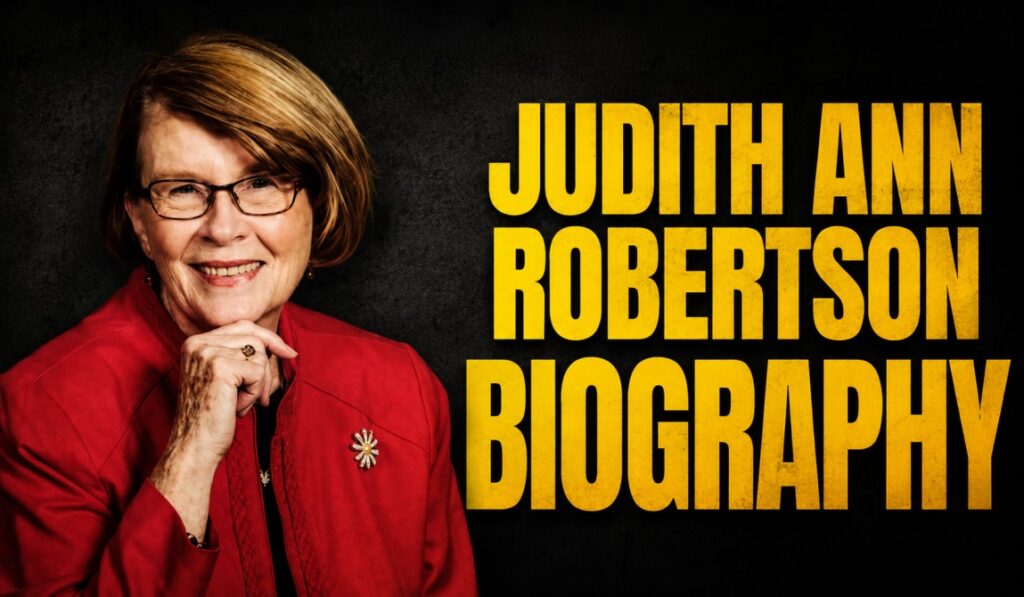
Judith Ann Robertson remains one of the most quietly powerful figures connected to the Duck Dynasty story. While Phil Robertson and his sons dominated television screens across America, Judith stood firm in the background, shaping the very foundation that made the Robertson family what it is today. She was not chasing fame. She was building something far more lasting — character, faith, and unbreakable family bonds.
Born into a humble household in rural Louisiana, Judith carried the weight of being the eldest sibling with extraordinary grace. Her life was not defined by headlines or camera appearances. It was defined by the consistency of her values, the depth of her Christian faith, and the quiet but unmistakable influence she held over everyone around her. Understanding her story means understanding the real roots of the Robertson family legacy.
Who Was Judith Ann Robertson and Why Does She Matter?
Many people searching for Judith Ann Robertson are drawn in through their curiosity about Duck Dynasty and the Robertson family background. But what they discover is a story far richer than a television footnote. Judith was the eldest child of James and Merritt Robertson, a woman whose faith-driven upbringing and dedication to family values created the moral environment from which Phil Robertson’s public convictions grew.
What Is the Connection Between Judith Ann Robertson and Duck Dynasty?
Judith never appeared on camera. She passed away in 2006, six years before Duck Dynasty premiered. Yet the show’s themes — faith, family unity, Southern Christian tradition, and personal integrity — trace directly back to the household she helped shape. The connection is not visible on screen. It is embedded in the character of every Robertson who ever stood in front of one.
Why Is Judith Ann Robertson Trending Online in 2026?
Interest in Judith Ann Robertson has grown steadily as genealogy research, family history platforms, and digital storytelling bring lesser-known figures into public conversation. People want to understand the human foundation beneath famous families. Judith represents exactly that — an everyday hero whose generational impact is only now receiving the wider recognition it deserves.
Quick Biography of Judith Ann Robertson
| Attribute | Details |
| Full Name | Judith Ann Robertson Gimber |
| Date of Birth | September 16, 1941 |
| Place of Birth | Dixie, Louisiana, USA |
| Parents | James Robertson and Merritt Robertson |
| Siblings | Phil Robertson, Si Robertson, and other Robertson siblings |
| Spouse | Mr. Gimber (married name adopted) |
| Known For | Elder sister of Phil Robertson; behind-the-scenes influence on Duck Dynasty family |
| Faith | Devout Christian; faith-centered worldview |
| Date of Death | June 20, 2006 |
| Place of Death | Mooringsport, Louisiana, USA |
| Age at Death | 64 years |
| Legacy | Instilled core family values in the Robertson household; deeply respected by nephews Willie, Jase, and Jep Robertson |
Early Life and Family Background
Judith Ann Robertson entered the world on September 16, 1941, in Dixie, Louisiana — a small, tight-knit Southern community where family loyalty and Christian faith were not just ideals but everyday realities. As the eldest child of James and Merritt Robertson, she was handed responsibilities early. That was simply the way things worked in households like hers, and Judith embraced those responsibilities without hesitation.
Growing up in rural Louisiana during the 1940s shaped her in ways that no formal education alone could. The Robertson household was grounded in a deeply Christian tradition. Morning prayers, Sunday services, and scripture-based life lessons were constants in their daily routine. Judith absorbed all of it and, more importantly, she lived it out. She was not just the oldest child in age — she was the oldest in spirit, often stepping in as a secondary parent figure when her parents were occupied with work or younger children.
Phil Robertson, who would go on to build the Duck Dynasty empire and become one of America’s most recognized outdoorsmen and Christian voices, has often spoken about the influence his upbringing had on him. Much of that upbringing passed through Judith’s hands. She reinforced what their parents taught, corrected where correction was needed, and offered encouragement when ambition needed a gentle push.
The Robertson siblings shared a bond forged through shared hardship, shared faith, and shared meals around the same table. Judith was at the center of that bond. She held it together when tension arose and celebrated it when things went well. Her role within the family was informal but entirely irreplaceable.
Education and Formative Years
Judith attended local schools in Louisiana during a period when educational opportunities in rural southern communities were modest at best. Despite those limitations, she demonstrated a sharp intellect and an even sharper sense of social awareness. She understood people — what motivated them, what discouraged them, and what they needed to hear versus what they wanted to hear.
Her education was not limited to classrooms. Much of what shaped Judith happened at home, at church, and through community involvement. She learned practical wisdom alongside academic knowledge, and that combination made her an unusually well-rounded individual for someone who never sought public recognition.
During her formative years, she developed the mentoring instincts that would define her adult life. Younger siblings looked to her not just for help with tasks but for perspective on decisions. She had a natural ability to listen without judgment and advise without overstepping — a rare quality that those around her noticed early. That reputation for wise counsel followed her throughout her life.
Her faith deepened steadily during these years as well. Rather than treating Christianity as a passive identity, she engaged with it actively. She read scripture, discussed theology within the family, and sought to apply biblical principles to real-world situations. That approach gave her a moral framework that remained consistent no matter what circumstances she faced.
Personal Life and Character
Judith Ann Robertson went on to marry and adopted the surname Gimber. Her personal life reflected the same values she carried from childhood — loyalty, devotion, and a genuine prioritization of people over possessions or prestige. She raised her family with intention, ensuring that the next generation understood why character matters more than reputation and why integrity cannot be compromised for convenience.
Those who knew Judith personally describe her in remarkably consistent terms. She was warm but firm. She was encouraging but honest. She had no patience for pretense and no interest in living a life designed for external approval. What mattered to her was whether she was actually being the person her faith called her to be — not whether others noticed.
Her character also revealed itself in how she handled disagreement. Rather than reacting with anger or shutting down conversation, she engaged thoughtfully. She was not someone who avoided hard topics. She simply approached them with enough maturity and composure that difficult conversations rarely escalated unnecessarily.
Within the Robertson family circle, she was described as an emotional anchor. When dynamics shifted, when relationships faced strain, and when life threw its inevitable complications at the family, Judith was the person others turned to. She offered perspective rooted in something deeper than emotion or personal preference — grounded in faith and accumulated wisdom built across decades of quiet, consistent living.
Professional Life and Contributions
Judith Ann Robertson did not pursue a career in the spotlight, and that was entirely consistent with who she was. Her professional identity was shaped more by contribution than by title. She engaged in community-oriented work, supported local initiatives, and remained an active presence within her church community throughout her adult years.
Her most significant contributions, however, were relational rather than institutional. She mentored family members with a generosity of time and attention that most people reserve for formal professional relationships. She guided her nephews through life questions that textbooks never cover — questions about integrity, about the relationship between personal faith and public behavior, and about what it means to build something worth leaving behind.
Phil Robertson’s evolution as a public figure and Christian voice did not happen in isolation. The values Judith reinforced during their shared upbringing planted seeds that grew into the convictions Phil has expressed publicly for decades. While he cultivated those convictions in his own unique way, the early nourishment came from an environment Judith helped shape.
Her contributions also extended to maintaining family cohesion. Families with multiple strong personalities — and the Robertsons certainly qualify — require someone capable of holding the center. Judith fulfilled that function consistently, ensuring that differences in temperament or opinion never fractured the underlying bond that held the Robertson family identity together.
Challenges and Personal Struggles
Judith Ann Robertson faced significant personal hardship during her lifetime, most notably a serious battle with cancer. She confronted that illness without abandoning the composure and faith that defined her throughout her life. Those who witnessed her during that period describe a woman who was clearly struggling physically but who refused to allow her illness to diminish her spirit or her concern for others.
Her response to illness itself became a lesson in resilience for the entire family. Rather than withdrawing or becoming consumed by fear, she continued to engage with the people she loved and the values she had always upheld. She did not pretend the situation was easy. She simply chose to face it with the same conviction she brought to every other challenge life presented.
That kind of quiet strength is not inherited passively. It is built through years of practicing what you believe when the stakes are low so that it becomes instinctive when the stakes are high. Judith had been building that resilience her entire life — through smaller trials, through the ordinary disciplines of faith, and through the conscious choice to trust something larger than her own circumstances.
Her struggle with illness also drew the family closer together. Facing potential loss has a way of clarifying what matters, and for the Robertson family, Judith’s health challenges reinforced exactly the priorities she had always emphasized — faith, family, and genuine presence with the people you love most.
Role in the Robertson Family Legacy
To understand the Robertson family legacy fully, it is necessary to look beyond the cameras and the television ratings. Duck Dynasty was the visible product of something much older and deeper — a set of values, a particular relationship with faith, and a commitment to family unity that did not originate in a television studio. Much of it originated in the Robertson household, and much of what shaped that household passed through Judith.
As Phil Robertson’s elder sister, she occupied a unique position. She knew him before fame, before controversy, and before the public narrative around him formed. She knew him as a younger brother who needed guidance, correction, and consistent affirmation of what truly mattered. That relationship shaped aspects of his character that eventually became central to his public identity and Christian convictions.
Her nephews — Willie Robertson, Jase Robertson, and Jep Robertson — have each spoken, in various ways, about the formative influences in their lives. The family’s emphasis on faith, accountability, and authenticity did not emerge spontaneously. It was cultivated over generations, and Judith was a significant cultivator. She modeled what it looked like to hold to your values even when no one was watching — and that example left a lasting impression on the family members who were.
Her role was also critical in maintaining the connective tissue between family members as the Robertson clan expanded and navigated the pressures that public life inevitably introduces. Staying grounded requires deliberate effort, and Judith’s ongoing presence as a steady, values-centered figure contributed to that groundedness in deeply practical ways.
Legacy and Lasting Impact
Judith Ann Robertson’s legacy is the kind that does not require a monument or a Wikipedia page to remain real. It lives in decisions made by people who carry her influence within them — in the way Phil approaches questions of faith and ethics, in the way her nephews speak about family responsibility, and in the values the next generation of Robertsons continues to uphold without being asked.
The lasting impact of a life like hers is measured differently than public achievement. It shows up in patterns of behavior across a family, in recurring values that surface across generations, and in the quiet recognition among those who knew her that certain foundational things would not be the same without her presence.
Her legacy also carries a broader cultural relevance. In a moment that consistently celebrates visibility and self-promotion, Judith Ann Robertson offers a powerful counter-narrative. She demonstrates that significance and fame are not the same thing, that the most formative influences in any community often belong to people who never sought recognition, and that devotion to something larger than personal ambition produces a far more durable kind of impact.
For the Robertson family, she remains a permanent reference point — someone whose life set a standard they continue to measure themselves against. That is perhaps the most honest and enduring definition of a lasting generational legacy.
Death and Memorials
Judith Ann Robertson Gimber passed away on June 20, 2006, in Mooringsport, Louisiana. She was 64 years old. Her death followed a prolonged and courageous battle with cancer, and it left a genuine void within the Robertson family that those closest to her have spoken about with evident emotion.
Her obituary and the remembrances shared by family members painted a picture entirely consistent with how she lived — a woman of faith, devoted to family, generous with her time and wisdom, and entirely unbothered by the absence of public recognition throughout her life.
Phil Robertson and her nephews honored her memory in the way she would have appreciated most — not with grand public gestures, but with continued commitment to the values she spent her life reinforcing. Memorials centered on who she actually was rather than on sentimentalized versions of her story, which itself reflects the authenticity she always modeled.
Her death reminded the family, and those who followed her story, that the people who hold communities together rarely receive recognition proportional to their contribution. Judith gave everything she had to her family and her faith, and the Robertson family’s continued cohesion stands as a living tribute to that lifelong investment.
Lessons and Inspiration from Judith Ann Robertson
The life of Judith Ann Robertson offers lessons that extend well beyond her immediate family. Her story speaks to anyone who has ever wondered whether quiet, unglamorous dedication is actually worth anything in a world that rewards noise and visibility.
The first lesson is about the real nature of influence. Judith never held a platform, never published a book, and never appeared on camera. Yet her influence on one of America’s most recognized television families is unmistakable. Influence does not require a megaphone. It requires consistency, integrity, and genuine investment in the people around you.
The second lesson is about faith as a practical framework rather than a passive identity. Judith did not simply believe in Christian values — she organized her entire behavior around them. That made her faith something observable and therefore something others could absorb simply by watching her live day to day.
The third lesson is about the dignity of a private life. There is enormous pressure today to perform every aspect of existence for a public audience. Judith rejected that impulse entirely and was no less significant for it. Her choice to remain outside the spotlight was not a limitation — it was a clear reflection of her deepest priorities.
Finally, her response to illness teaches something profound about character under pressure. She faced a serious, ultimately fatal illness and met it with composure, faith, and continued concern for others. That is a demonstration of what it truly looks like to live what you claim to believe — and very few people manage it with such visible consistency.
Table: Key Milestones of Judith Ann Robertson
| Year | Milestone | Significance |
| 1941 | Born in Dixie, Louisiana | Began life in a faith-centered family environment |
| 1950s–1960s | Took on elder sibling responsibilities | Became a formative guide for younger Robertson siblings |
| 1960s–1970s | Married and started her own family | Extended her values-centered approach into the next generation |
| 1970s–1990s | Mentored nephews Willie, Jase, and Jep | Shaped the character of future Duck Dynasty figures |
| Early 2000s | Battled cancer with courage | Demonstrated faith and resilience under serious personal hardship |
| June 20, 2006 | Passed away in Mooringsport, Louisiana | Left behind a profound family legacy at age 64 |
| Present | Remembered through Robertson family values | Her influence continues in faith commitments and family ethics |
FAQ’s About Judith Ann Robertson
Who was Judith Ann Robertson?
She was the eldest sister of Phil Robertson and a deeply influential, faith-driven figure who quietly shaped the values behind the Duck Dynasty family.
What role did Judith play in the Robertson family?
She served as a mentor, moral anchor, and guiding presence for her siblings and nephews long before Duck Dynasty became a cultural phenomenon.
When and where did Judith Ann Robertson pass away?
She passed away on June 20, 2006, in Mooringsport, Louisiana, after a courageous battle with cancer at the age of 64.
How did Judith influence Phil Robertson?
She reinforced Christian values and family responsibility during Phil’s formative years, helping shape the convictions he later expressed so publicly.
Did Judith Ann Robertson appear on Duck Dynasty?
No — she lived entirely away from cameras and passed away before the show premiered in 2012, but her influence is deeply embedded in the family’s public identity.
What is Judith Ann Robertson’s lasting legacy?
Her legacy lives in the Robertson family’s continued commitment to faith, integrity, and family unity — values she dedicated her entire life to modeling.
Why is Judith Ann Robertson’s story worth knowing?
Her life proves that the most meaningful influence is often invisible to the public, reminding us that quiet dedication can shape legacies far larger than any spotlight ever could.
Conclusion
Judith Ann Robertson Gimber lived without fame and died without headlines, yet her imprint on one of America’s most recognized families is real, deep, and entirely enduring. As Phil Robertson’s elder sister, she shaped the moral and spiritual environment that eventually produced the Duck Dynasty phenomenon — not by seeking credit for it, but by consistently doing the quiet, necessary work of guiding, mentoring, and holding her family together.
Her biography is not a story about television or celebrity. It is a story about the kind of influence that outlasts any season of any show — the kind rooted in faith, expressed through daily choices, and measured in the lives of people who carry your values forward long after you are gone.
For anyone searching for a blueprint of meaningful, lasting impact, Judith Ann Robertson’s life offers exactly that. She was the unseen foundation beneath a very visible structure, and foundations, by nature, are what make everything else possible.

I’m John Ilam, a content writer on AgeBioHub, focused on creating biography-based articles. I write about public figures, their life stories, careers, and personal backgrounds in a clear and simple way.
I keep my content focused on biographies so readers can easily find the information they’re looking for without confusion. My goal is to make every article informative, structured, and easy to read.