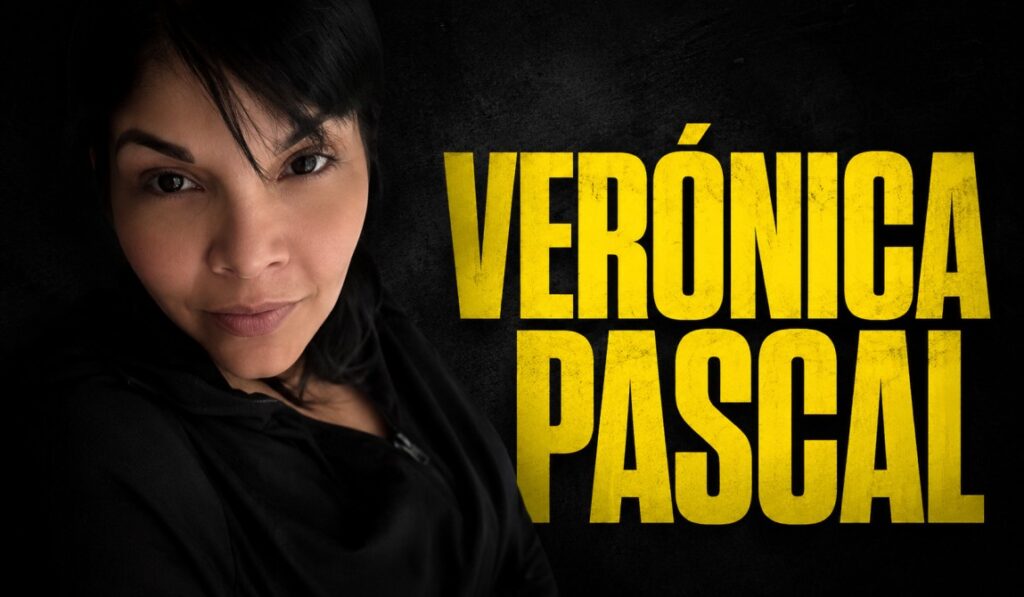
Verónica Pascal was a Chilean child psychologist, devoted mother, and political refugee whose life story deserves far more recognition than it typically receives. Born on February 15, 1953, she lived through forced exile, raised four remarkable children, and fought a deeply private battle with mental health struggles that the world around her never fully understood. While millions recognize her son Pedro Pascal from The Mandalorian, The Last of Us, and Game of Thrones, her own journey stands as one of quiet heroism, sacrifice, and enduring maternal influence.
She was not a celebrity. She held no public platform. Yet her impact on the people she raised, and through them on the wider world, is impossible to overstate. Her story sits at the intersection of Latin American political history, immigrant resilience, motherhood, and the painful reality of depression and suicidal ideation that can consume even the strongest and most educated among us.
To understand Pedro Pascal’s emotional depth, Lux Pascal’s courageous authenticity, and the unbreakable solidarity of the entire Pascal family legacy, you must first understand the woman who built the foundation beneath all of it. This is her story, told in full.
Quick Biography Of Verónica Pascal
| Detail | Information |
| Full Name | María Verónica Pascal Ureta |
| Known As | Verónica Pascal |
| Date of Birth | February 15, 1953 |
| Age at Death | 47 years old |
| Birthplace | Palma, Mallorca, Spain |
| Nationality | Chilean |
| Ethnicity | Hispanic / Latino |
| Profession | Child Psychologist |
| Spouse | José Balmaceda Riera (Fertility Doctor) |
| Children | Javiera Balmaceda, Pedro Pascal, Nicolás Balmaceda Pascal, Lux Pascal |
| Known For | Mother of Pedro Pascal, Hollywood actor |
| Cause of Death | Suicide |
| Death Year | 2000 |
| Place of Death | California, United States |
| Legacy | Raised four children who carry her values of empathy, courage, and unconditional love |
María Verónica Pascal Ureta was born on February 15, 1953, in Palma, Mallorca, Spain, to Luis Eduardo Gastón Pascal Vigil and Carmen Ureta Varas. Though her birthplace was Spain, she was raised within a deeply Chilean cultural identity shaped by progressive values, intellectual curiosity, and an unwavering commitment to social justice and civic responsibility. From childhood, conversations about human rights, political accountability, and service to others were woven into her daily environment.
Her family’s political significance in Chilean history was considerable. She was the niece of Andrés Pascal Allende, the leader of Chile’s Revolutionary Left Movement, who was himself a nephew of President Salvador Allende. This direct connection to one of South America’s most consequential political figures placed Verónica at the very center of a turbulent era, one that would eventually reshape every dimension of her adult life.
Education and Career Path
From an early age, Verónica Pascal demonstrated a powerful curiosity about human behavior, emotional development, and the psychological needs of children. She was drawn instinctively to understanding how early childhood experiences shape a person’s long-term emotional wellbeing, a fascination that translated naturally into a formal career in child psychology.
She pursued advanced education in childhood development and mental health, building her academic foundation on the belief that early psychological intervention could fundamentally alter the course of a child’s life. Her studies were not simply a professional exercise but a personal calling, rooted in the same compassion and service-oriented values she had absorbed from her politically engaged family.
As a practicing child psychologist in Chile, she earned recognition for her patience, her emotional intelligence, and her genuine commitment to helping families navigate psychological and developmental challenges. Her clinical approach was shaped by empathy over authority, a style that reflected her broader worldview: that every child deserves to feel seen, valued, and supported without condition.
Her professional identity was inseparable from her personal one. The skills she developed as a mental health professional informed how she loved her own children, how she processed her own experiences, and ultimately, how she struggled when those same professional tools proved insufficient to protect her from her own psychological pain.
Marriage and Personal Life
Verónica Pascal married José Balmaceda Riera, a highly respected fertility doctor whose dedication to medical service mirrored her own commitment to psychological care. Their relationship was grounded in mutual respect, shared intellectual values, and a joint belief that professional life should serve human dignity. Together, they created a household that was simultaneously a safe emotional space and an intellectually engaged environment.
The couple welcomed four children: Javiera Balmaceda Pascal, Pedro Pascal, Nicolás Balmaceda Pascal, and Lux Pascal. Their home was one where Chilean culture and global awareness coexisted, where bilingualism was practiced and both languages treated as equal inheritances. Verónica applied her child psychology expertise directly to her parenting, approaching each child’s emotional and developmental needs with the same professional attentiveness she offered her clinical clients.
She understood, at a level most parents never reach, that children require more than physical safety. They need emotional attunement, the freedom to form their own identities, and consistent reassurance that who they are is enough. That understanding shaped the home she built, a home the Pascal children have spoken of with affection, warmth, and deep gratitude across many years of public interviews.
Read More: Nicolás Balmaceda Pascal: Family Background and Early Life
Nicolás Balmaceda Pascal, one of Verónica’s sons, grew up shaped by the same household of political awareness, cultural resilience, and maternal warmth that defined all four of the Pascal children’s early lives. His personal history offers an additional window into the lasting influence of a mother who treated individual strength and emotional honesty as the most important gifts she could offer her children. His story reinforces what becomes clear across the entire Pascal family narrative: that Verónica’s influence did not diminish with her absence but continued through each of the lives she had shaped.
Political Crisis and Forced Exile
The 1970s in Chile represented one of the darkest chapters in Latin American political history. When General Augusto Pinochet’s military coup overthrew President Salvador Allende on September 11, 1973, the consequences for families connected to the previous government were immediate, severe, and in many cases, fatal. Political persecution, enforced disappearances, and arbitrary imprisonment became the instruments of the new regime, targeting anyone associated with left-wing movements or the Allende administration.
For the Pascal family, the danger was not abstract. Verónica’s direct family connection to Andrés Pascal Allende and his leadership of the Revolutionary Left Movement placed them squarely in the crosshairs of the Pinochet dictatorship. With Pedro still an infant, Verónica and José faced an impossible decision: remain in the country they loved and risk their lives, or abandon everything familiar to protect their children’s futures.
They chose survival. The family first sought political asylum inside the Venezuelan embassy in Santiago, sheltering within its walls until diplomatic arrangements could secure their departure. From Santiago, they traveled to Denmark, where they were granted temporary political asylum, before eventually making their way to the United States. Each leg of that journey required surrendering something: their home, their professional networks, their extended family connections, and the cultural identity that had defined everything about who they were.
The psychological weight of forced displacement carried by a mother with young children, crossing borders on the basis of political threat, is a form of trauma that does not resolve with physical safety. Verónica was not simply relocating her household. She was surviving the collapse of her known world while trying to ensure her children experienced none of the fear she carried internally.
Life in the United States
The Pascal-Balmaceda family settled initially in San Antonio, Texas, beginning the long and often painful process of rebuilding professional and personal lives in an entirely foreign environment. Both Verónica and José were trained, experienced professionals in Chile, but the immigrant experience in the United States presented familiar obstacles: language barriers, credential recognition challenges, cultural adjustment, and the exhausting task of establishing new careers while simultaneously raising four young children through cultural dislocation.
The family later relocated to Orange County, California, where they worked to establish a more stable and permanent foundation. Verónica and José built a genuinely bicultural household, one that honored Chilean heritage and maintained the family’s linguistic and cultural roots while actively encouraging the children to engage with the opportunities and realities of American life. Education was treated as non-negotiable, political awareness was encouraged from an early age, and the family’s refugee experience was framed not as a source of shame but as a defining source of perspective and strength.
Verónica’s role during these years extended far beyond typical parenting. She was the emotional anchor of a household navigating profound instability, the person who understood most clearly what her children needed psychologically during years of cultural dislocation and identity formation. Her professional training allowed her to recognize the psychological risks of displacement and work actively against them within her own home. That invisible labor, steady, unglamorous, and largely unacknowledged, was among the most significant contributions she made to her children’s futures.
Motherhood and Emotional Influence
Verónica Pascal’s approach to motherhood combined professional expertise in child psychology with a depth of personal warmth that created something genuinely rare: a home environment where both intellectual development and emotional safety were treated as equally essential. She understood developmental milestones, emotional regulation, and the long-term consequences of childhood experience in ways most parents never access. But she was also, at her core, a mother who simply loved her children with fierce and unconditional consistency.
She cultivated curiosity, artistic expression, and social consciousness in her household, encouraging her children to engage with ideas, challenge assumptions, and develop their own moral frameworks rather than simply inheriting hers. She did not impose rigid expectations about career paths or life choices but instead worked to build in each child the inner qualities, confidence, empathy, and authentic self-awareness, that would allow them to pursue any path successfully.
Her influence on Pedro Pascal’s decision to pursue acting is documented across multiple interviews throughout his career. Her encouragement of emotional authenticity, and her own quiet example of carrying sensitivity alongside strength, gave him permission to enter a profession that demanded both. For Lux Pascal, whose journey toward gender identity and personal authenticity would unfold years after Verónica’s death, her mother’s parenting approach had already laid the essential groundwork: a family environment where individual identity was celebrated rather than questioned.
Return to Chile
When Pinochet’s dictatorship eventually ended and political conditions in Chile shifted sufficiently to make return possible, Verónica and José made the emotionally layered decision to go home. The pull of their homeland, its landscape, its culture, and the extended family network they had left behind more than a decade earlier, was powerful and real. For Verónica specifically, the prospect of returning carried the weight of everything she had lost and the hope of recovering a sense of belonging and continuity that exile had disrupted.
But return did not deliver the closure or the restoration she had hoped for. The Chile they came back to had been fundamentally transformed by years of authoritarian rule, collective trauma, and political reorganization. The professional networks she had once belonged to no longer existed in their original form. The social fabric of the country had been rewoven around experiences she had not shared. And the family itself had been permanently altered by the years abroad, carrying an accumulated weight of displacement that did not simply lift upon arrival home.
This difficult and disorienting experience of re-entry, of being neither fully at home in Chile nor fully at peace with the life built in exile, contributed significantly to the internal struggles Verónica would carry in her final years. The homecoming she had imagined could not match the reality she encountered, and that gap between expectation and experience deepened the psychological burden she was already carrying.
Mental Health Struggles
There is a specific and painful irony embedded in Verónica Pascal’s mental health story: a woman who spent her professional life helping others recognize and navigate psychological suffering found herself unable to access the same support for her own. The cumulative trauma she had absorbed over decades, beginning with political persecution, moving through the years of forced exile and cultural displacement, and continuing through the difficult emotional terrain of return, had created psychological wounds that her professional training alone was insufficient to heal.
Depression and suicidal ideation are not deterred by intelligence, professional knowledge, or outward circumstances. The stigma surrounding mental illness, particularly in the cultural and generational context Verónica inhabited, made it harder rather than easier for her to present herself as someone who needed help. Her identity as a caregiver, as a psychologist and a mother, may have reinforced an internal barrier against seeking the kind of sustained psychological support she would have readily encouraged in anyone else.
Her mental health battle was private in ways her family did not fully recognize at the time. The layered trauma of political violence, exile, professional disruption, and identity uncertainty created a psychological burden that required more than personal resilience to address. Her experience stands as a systemic reminder: that access to mental health support is not automatic, that professional expertise does not guarantee personal immunity, and that the people most skilled at helping others are sometimes the least likely to ask for help themselves.
Death and Cause
Verónica Pascal died in 2000 at the age of 47, when her son Pedro was 24 years old and still in the early, uncertain years of building his acting career. She died by suicide, a loss that struck the Pascal family with devastating and lasting force. The grief that follows suicide bereavement is distinctly layered: compounded by confusion, guilt, unanswered questions, and the particular anguish of wondering whether different circumstances, different timing, different conversations, might have changed the outcome.
Her death arrived at a moment of compound vulnerability for the family. Pedro was navigating professional rejection and uncertainty as a struggling young actor, and the simultaneous loss of his mother collapsed whatever emotional scaffolding he had been relying on. For all four of her children, and for José, her passing represented the loss of something irreplaceable: the person who had been the emotional center of the family, who had guided them through exile, cultural transition, and years of rebuilding, and who had never once stopped believing in each of them.
Her death placed mental health awareness and suicide prevention at the center of the Pascal family’s lived experience in a way that would permanently influence their public advocacy. It demonstrated, with devastating clarity, that mental health crises are invisible until they are not, that suffering can coexist with apparent strength and competence, and that checking in on those we love is not a courtesy but a potentially life-saving act.
Impact on Pedro Pascal
Pedro Pascal has spoken throughout his career with rare emotional honesty about the way his mother’s life and death shaped him. Losing her at 24, during an already uncertain period, was not simply a grief event. It was a formative psychological experience that reconfigured his understanding of loss, resilience, human fragility, and the importance of emotional honesty in both art and personal life. The qualities that make his performances in The Mandalorian, The Last of Us, Game of Thrones, and Narcos so emotionally compelling, the willingness to sit with vulnerability, to portray tenderness without apology, trace directly back to a mother who modeled those qualities consistently.
In multiple interviews, he has credited Verónica with instilling the values that define his public and private self: empathy, authenticity, social consciousness, and the conviction that emotional sensitivity is a form of strength rather than a liability. She taught him, by example, that a person could carry grief and still show up fully. That knowledge, hard-won through his own mourning process, informs the emotional depth he brings to every role he takes.
Beyond his artistic work, Verónica’s memory is explicitly present in Pedro’s public advocacy. His vocal and consistent support for LGBTQ+ rights, his openness about grief and mental health awareness, and his willingness to use his platform for causes beyond entertainment all reflect priorities she held during her lifetime. Her influence on Pedro Pascal is not historical. It is present tense, active, and growing with every public decision he makes.
Lux Pascal and Family Legacy
Lux Pascal, the youngest of Verónica’s four children, has publicly shared their journey as a transgender woman, stepping into visibility at a cultural moment when such courage carries both personal cost and significant social meaning. In speaking about their transition and their identity, Lux has consistently returned to the family environment their mother created, describing it as a foundation of unconditional love and genuine acceptance that made authentic living feel not just possible but supported.
Verónica did not live to witness Lux’s transition. But the values she embedded in her household survived her death entirely intact. The acceptance that Lux found within the Pascal family did not materialize spontaneously. It was cultivated over years by a mother who understood, from both professional and personal experience, that identity is not a problem to be managed but a truth to be honored. That understanding, transmitted through decades of deliberate and loving parenting, gave Lux the psychological safety to live openly.
The enduring solidarity among the Pascal siblings, the visible and consistent mutual support between Javiera, Pedro, Nicolás, and Lux, stands as perhaps the most tangible evidence of Verónica’s lasting influence. A family that survived political exile, the loss of their homeland, and the devastating grief of losing their mother in the most painful of circumstances, has remained not just intact but genuinely close. That is not coincidence. It is the direct result of the family culture she spent her life building.
Why Her Story Matters
Verónica Pascal’s story matters because it gives voice and visibility to experiences that are almost never centered in public conversation. She represents the countless women who have carried families through political violence and forced displacement, who rebuilt professional identities in foreign countries without recognition or support, and who fought invisible psychological battles while ensuring their children felt safe, loved, and capable. Her story illuminates the human cost of authoritarianism, the generational impact of political trauma, and the particular, unacknowledged labor of mothers in exile.
Her death carries an urgent message about systemic failures in mental health support. The fact that a trained child psychologist, a woman with detailed professional knowledge of depression, suicidal ideation, and trauma recovery, could not access adequate help for herself speaks to gaps that persist across educational, professional, and cultural boundaries. Her story is not a cautionary tale about individual weakness. It is a structural indictment of the stigma around mental illness and the barriers that prevent even the most knowledgeable people from seeking care.
Through the public advocacy of Pedro and Lux, Verónica’s story has contributed meaningfully to broader cultural conversations about destigmatizing mental health, honoring refugee experiences, recognizing the invisible labor of mothers, and the long-term consequences of political persecution on family systems. She deserves to be remembered on her own terms, not as a supporting character in someone else’s biographical narrative, but as a subject whose own life is worth understanding fully.
Hidden Struggles and Quiet Courage: How Exile in Chile and the United States Shaped Her Life
The external geography of Verónica Pascal’s life, Chile to Venezuela to Denmark to Texas to California and back to Chile, maps only the surface of what she actually lived through. The internal landscape was far more complex: a daily recalibration of identity, safety, and purpose across cultures, languages, and political contexts that most people will never be asked to navigate. She carried that complexity largely alone, maintaining a household where her children felt grounded even when she had no certainty of her own footing.
In the United States, she encountered the experience common to many highly educated Latin American immigrants: the disorienting gap between professional competence at home and professional invisibility abroad. A woman who had established herself as a skilled and respected child psychologist in Chile found herself starting over in a country that did not automatically recognize her credentials, her experience, or her expertise. That specific kind of professional erasure, occurring simultaneously with cultural displacement and the ongoing processing of political trauma, is deeply destabilizing in ways that rarely receive public acknowledgment.
The quiet courage of her exile years was entirely private and entirely consistent. There were no ceremonies to honor mothers who held refugee households together, no public recognition for the emotional regulation required to raise four children through profound instability while carrying unresolved grief and trauma. Her courage was unglamorous, invisible, and absolutely essential. Without it, the story of the Pascal family as the world knows it today would not exist.
A Mother’s Lasting Influence on Pedro Pascal: Love, Loss, and Emotional Legacy
The relationship between Verónica and Pedro Pascal was one of genuine and deep emotional attunement. From early in his childhood, she recognized in him qualities she understood through her professional lens: emotional sensitivity, imaginative depth, and a natural capacity for empathy. Rather than treating these as vulnerabilities requiring management in a boy, she cultivated them as gifts, actively encouraging the emotional openness that would later become his greatest professional asset.
Pedro has described the early years of his acting career as marked by sustained rejection and professional uncertainty, the standard experience of a young actor without industry connections in a competitive field. During those years, Verónica was a reliable and consistent source of emotional support, someone who believed in his potential before the entertainment industry had given him a single reason to believe in himself. Her death, arriving before he had achieved any of the success she had always anticipated for him, generated a grief complicated by unfinished conversations and unshared milestones.
That grief was not paralyzing. It became, over time, a source of emotional depth and professional motivation. Pedro channeled his mourning into greater openness in his work, greater commitment to psychological honesty in his performances, and greater public advocacy for the causes Verónica held privately dear. His support for mental health awareness is explicitly and personally connected to her memory. His advocacy for Lux’s public journey mirrors the acceptance his mother modeled. The emotional legacy she left is not sentimental residue. It is structurally present in every significant artistic and personal decision he has made since her death.
Inside the Pascal Family Bond: Her Role in Shaping Lux Pascal and Her Siblings
The solidarity visible among the Pascal siblings today was not produced by shared celebrity or public circumstance. It was built incrementally, over years, in a household where Verónica and José made a deliberate and consistent choice to raise four children as genuine individuals whose differences were sources of family strength rather than complications to be managed. Each child was parented with specific attention to their individual emotional and developmental needs, a practice as informed by professional psychology as by personal love.
For Lux Pascal, whose public journey as a transgender woman demanded both internal courage and family solidarity, the foundation Verónica built proved to be the difference between isolation and support. The consistent and vocal advocacy that Pedro, Javiera, and Nicolás have offered Lux reflects a family culture of unconditional acceptance that was not improvised but deliberately cultivated across decades of intentional parenting. Verónica created the emotional environment from which that acceptance could grow organically and survive even her absence.
The ongoing relationships among the Pascal siblings, marked by genuine solidarity and active mutual support rather than performative family unity, continue to reflect the specific values she prioritized: empathy, authenticity, and the active daily choice to stand by the people you love. They carry forward, together, a family identity assembled from principles she instilled, principles that have proven strong enough to hold a family together through political exile, cultural displacement, and devastating personal loss.
Legacy Beyond Tragedy: Why Her Story Still Inspires Millions Today
Verónica Pascal’s legacy extends far beyond the circumstances of her death. Through her children’s consistent openness about their family history, she has become a figure whose story resonates across cultures and generations with anyone who has experienced political displacement, mental health struggles, or the invisible, exhausting labor of holding a family together under extraordinary pressure. Her life embodies a form of heroism that rarely receives formal recognition: the daily, private, unglamorous work of survival and unconditional love.
Her story contributes directly to an ongoing and necessary cultural conversation about what genuine mental health awareness actually requires. Intellectual understanding of mental illness is not sufficient protection against it. Communities, families, and institutions must actively create conditions under which people feel safe enough to acknowledge suffering, seek help without shame, and access support without prohibitive barriers. Verónica’s death, occurring despite her knowledge, her loving family, and her professional expertise, illustrates the gap between understanding mental health and having access to mental health care that remains a global challenge.
For the millions who encounter her story through Pedro and Lux’s public advocacy, she represents something deeply universal: the collision of personal strength and private suffering, the way political history reshapes individual lives across generations, and the enduring, transformative power of a mother’s love to shape children who carry that love into the world long after she is gone. That legacy belongs not only to the Pascal family. It belongs to everyone who has ever been profoundly shaped by someone whose sacrifices went largely unseen and largely uncelebrated.
Frequently Asked Questions
Who was Verónica Pascal and why is she significant?
She was a Chilean child psychologist, political refugee, and devoted mother of four, significant for raising Pedro and Lux Pascal and for her story of survival, exile, and mental health awareness.
Why did the Pascal family flee Chile?
The family fled as political refugees following Pinochet’s 1973 military coup, which directly threatened families connected to the Allende government and the Revolutionary Left Movement.
What was Verónica Pascal’s professional background?
She was a trained child psychologist specializing in childhood development and emotional wellbeing, a career that reflected both her academic training and her deeply compassionate personal values.
How did Verónica Pascal’s parenting shape Pedro Pascal?
She nurtured his empathy, emotional sensitivity, and creative authenticity from childhood, qualities that now define both his personal character and his acclaimed performances on screen.
Did Verónica Pascal live permanently in the United States?
She lived in San Antonio, Texas, and later Orange County, California, following the family’s political exile, but eventually returned to Chile before her death in 2000 at age 47.
What mental health challenges did Verónica face in her later years?
She carried the cumulative trauma of political persecution, forced displacement, cultural dislocation, and identity loss, which intensified into the depression and suicidal ideation she battled privately in her final years.
What is Verónica Pascal’s lasting legacy today?
Her legacy lives through her children’s empathy, solidarity, and public advocacy, and through broader conversations about refugee resilience, mental health destigmatization, and the unseen sacrifices of mothers who hold families together under impossible pressure.
Conclusion
Verónica Pascal lived a life that refuses to be reduced to a single defining moment. She was a child psychologist who understood the human mind with professional precision. She was a political refugee who rebuilt her family across borders with quiet and unwavering determination. She was a mother who gave her children the emotional architecture they would rely on for the rest of their lives. And she was a human being who carried a private weight of trauma, grief, and psychological suffering that ultimately proved too heavy to bear alone.
Her death was a tragedy. But it does not define her, and it should never be the only thing her story communicates. What defines Verónica Pascal is the household she created, the values she transmitted, and the people her children became because of the foundation she so carefully and lovingly built. Pedro Pascal’s emotional depth and moral courage, Lux Pascal’s authentic and visible life, and the enduring solidarity of all four Pascal siblings trace directly back to a woman who believed with absolute conviction in the power of unconditional love, emotional honesty, and genuine human connection.
Her name belongs in this conversation not as a supporting detail in someone else’s biography but as a subject in her own right. She faced extraordinary circumstances with imperfect but genuine courage, and her story continues to speak clearly and powerfully to anyone navigating the painful, universal intersection of political history, personal loss, and the irreplaceable need to be truly seen and deeply understood.

I’m John Ilam, a content writer on AgeBioHub, focused on creating biography-based articles. I write about public figures, their life stories, careers, and personal backgrounds in a clear and simple way.
I keep my content focused on biographies so readers can easily find the information they’re looking for without confusion. My goal is to make every article informative, structured, and easy to read.