
Introduction
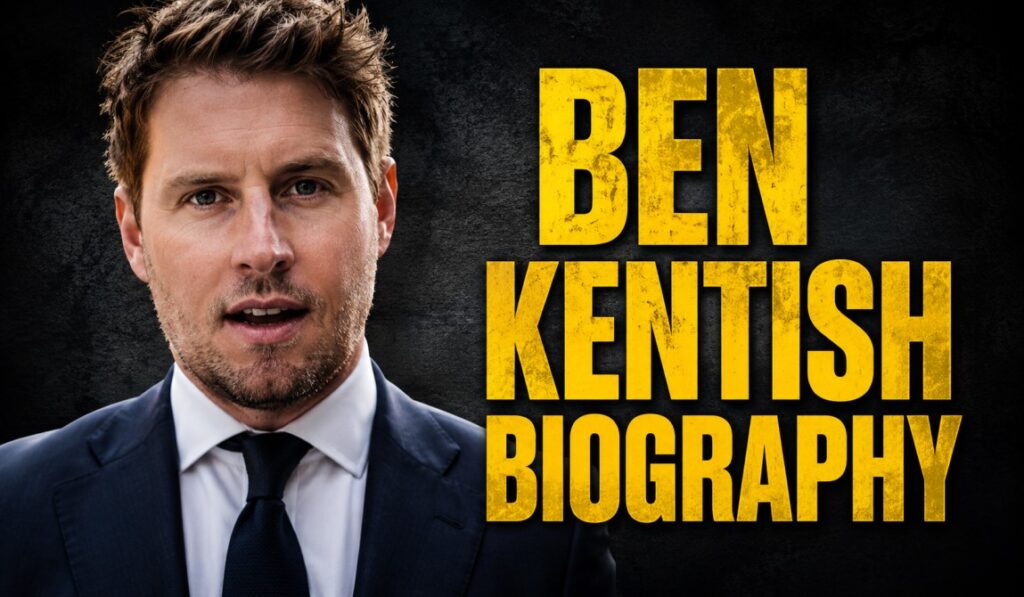
Ben Kentish is one of Britain’s most respected political broadcasters and journalists, recognised nationwide as the voice behind Late Nights with Ben Kentish on LBC (Leading Britain’s Conversation). Four nights a week, Monday through Thursday, he commands a late-night audience that tunes in specifically for his brand of calm, structured, and genuinely fair political analysis.
What separates Kentish from many of his contemporaries is not just his academic pedigree or career trajectory — it is the consistency of his professional values. In a media landscape increasingly defined by noise and partisan point-scoring, he has built his reputation on evidence-based questioning, cross-party accountability journalism, and a broadcasting tone that respects both his guests and his listeners.
This biography covers the full picture — his North London roots, Cambridge education, journalism career, political reporting style, personal life, digital presence, and financial standing in 2026.
Ben Kentish Early Life and Education
Where Was Ben Kentish Born and Raised?
Benjamin Leo Kentish was born on 20 March 1991 in North London, making him 35 years old in 2026. He attended a local comprehensive school — not a private or independent institution — a fact that distinguishes his background from many of his Cambridge peers and arguably informs his ability to connect with audiences across different social backgrounds.
Growing up in one of the UK’s most politically active and culturally diverse cities gave him early exposure to the kind of civic debate and social complexity that would later define his professional work.
University of Cambridge: Politics, Psychology, and Sociology
Kentish went on to study at the University of Cambridge, one of the world’s most competitive academic environments. His chosen course — Politics, Psychology, and Sociology — was not a narrow political science degree but a genuinely multidisciplinary programme. It equipped him with tools to understand institutional power structures, human decision-making, and the sociological forces that drive political behaviour.
This foundation matters. It explains why his on-air analysis rarely stays at the surface level of party politics — he consistently draws connections between policy, public psychology, and social consequence that many political journalists miss entirely.
Cambridge Union Society: President and Debating Powerhouse
The single most formative experience of Kentish’s university years was his involvement with the Cambridge Union Society, one of the world’s oldest and most celebrated debating institutions. He rose through its membership to become President during the Lent Term of 2013 — a role that demands intellectual stamina, the ability to chair high-pressure debates, and the skill to engage world-class speakers from across the political spectrum.
The Cambridge Union has shaped prime ministers, Nobel Prize winners, and senior media figures. For Kentish, it was the professional rehearsal space where his oratorical precision and political instincts were sharpened before he ever sat behind a microphone.
Career in Journalism
From Speechwriting to Reporting: The Early Professional Years
After graduating from Cambridge, Kentish spent time working in political communications and speechwriting — roles that placed him inside the machinery of how political messages are built, tested, and delivered to the public. This experience gave him an insider’s understanding of political narrative construction that most journalists never acquire from the outside.
That knowledge would later make him a sharper, harder-to-deflect interviewer. He understands the playbook because he once helped write it.
The Independent: Breaking Into National Journalism
Kentish’s formal journalism career began in August 2016 when he joined The Independent as a news reporter. Over the following years, he covered some of the most significant and emotionally demanding stories in recent British history — the Grenfell Tower fire, the Manchester Arena bombing, the Westminster Bridge terror attack, and the 2017 General Election.
In January 2018, he was promoted to Political Correspondent and joined the parliamentary press gallery, reporting directly from Westminster. This was the moment his career trajectory became unmistakably clear — he was building towards a senior role in British political media.
Joining LBC: The Platform That Defined His Career
In January 2020, Kentish made the move to LBC as Westminster Correspondent. He did not arrive as a finished product — he earned his place through consistent, credible reporting from the heart of British politics. By March 2022, he had been promoted to Westminster Editor, and in September 2023, he was awarded his own weekday programme.
That programme — Late Nights with Ben Kentish — airs Monday to Thursday, 10 PM to 1 AM, and has become one of LBC’s most distinctive political offerings.
Late Nights with Ben Kentish: Format, Style, and Audience
The show blends several formats that Kentish handles with equal confidence. There are one-on-one interviews with politicians and policy experts, structured debates on the day’s major issues, and listener phone-ins that bring genuine public voices into the political conversation. His ability to hold all three formats together — rigorous with guests, accessible with callers, analytical in commentary — is what makes the programme work.
Regular topics include NHS funding, immigration and asylum policy, cost-of-living pressures, housing reform, energy security, public sector pay, and the UK’s evolving post-Brexit trade relationships. The breadth ensures the programme never becomes a niche product for political insiders.
Media Appearances Beyond LBC
Beyond his LBC programme and role as a columnist for The i Paper, Kentish appears regularly as a political analyst on BBC News, Sky News, CNN, and Al Jazeera. These cross-platform appearances extend his reach well beyond LBC’s existing audience and cement his standing as a trusted voice in British political broadcasting at an international level.
Ben Kentish Political Views and Reporting Style
Impartiality as a Professional Commitment, Not a Performance
The most consistent observation made about Ben Kentish’s journalism — by listeners, fellow journalists, and political figures alike — is his genuine impartiality. He does not publicly identify with any political party, and his on-air conduct makes that non-alignment credible rather than merely claimed.
This matters because declared impartiality is easy; demonstrated impartiality is rare. Kentish earns it through consistent behaviour across every broadcast.
How He Challenges Politicians Across the Spectrum
His interviewing approach is built on preparation and evidence. He enters every interview with documented policy positions, voting records, and factual references — which means evasive answers get caught, contradictions get flagged, and clarity gets demanded regardless of which party the guest represents.
Conservative ministers and Labour frontbenchers receive the same standard of scrutiny. During the Brexit years, he challenged both Remain and Leave advocates with equal rigour. Following Labour’s 2024 general election victory, he applied the same critical lens to the new government that he directed at its predecessor.
Broadcasting Tone: Rigorous Without Being Combative
What makes Kentish’s style distinctive is its tone calibration. He is direct without being dismissive, persistent without being aggressive, and analytically demanding without becoming inaccessible to the general listener. In political radio — a format that rewards confrontation — his measured approach is genuinely unusual and genuinely effective.
Ben Kentish Personal Life: Family, Relationships, and Privacy
A Deliberate and Consistent Choice to Stay Private
Ben Kentish keeps his personal life private — and this is a deliberate, sustained, principled choice rather than a product of obscurity. He has never discussed his relationship status in interviews. His social media accounts contain no personal relationship content. No partner has appeared at industry events or maintained any public profile connected to him.
This level of discretion is increasingly rare in the social media era and reflects a conscious separation between professional identity and private life.
Is Ben Kentish Married? What Is Known
His marital status remains publicly unconfirmed. No wife or partner has been named, photographed, or verified in any mainstream journalistic source. Whether he is married, in a relationship, or single is simply not part of the public record — because he has chosen not to make it so.
That choice deserves respect rather than speculation.
His Father: Jonathan Kentish
The one family member who has appeared briefly in the public record is his father, Jonathan Kentish. In 2021, the two completed a Macmillan Cancer Support Mighty Hike together, raising funds in memory of family members lost to cancer. It is one of the most human details on the public record about his personal life — and it reveals someone with strong family bonds and genuine charitable commitment.
Children and Religious Beliefs
Kentish has never publicly confirmed having children. Similarly, he has not identified with any particular religious tradition, though he engages with questions of faith and religious freedom thoughtfully in his professional capacity.
Why Journalists Keep Personal Lives Private
There are specific, practical reasons why serious political journalists protect their personal lives. They regularly challenge powerful figures, hold governments to account, and generate friction through their reporting. Keeping family life separate protects loved ones from becoming targets of that professional friction — whether through unwanted media attention, online hostility, or political blowback.
Beyond safety, professional credibility also benefits. A broadcaster whose personal relationships remain private is less vulnerable to accusations of conflict of interest or ideological bias. Kentish’s privacy choices are principled, not evasive.
Social Media and Public Engagement
Twitter/X: Real-Time Political Commentary
On Twitter/X (@BenKentish), Kentish maintains an active presence that functions as a real-time extension of his broadcast work. He shares political commentary, responds to breaking news, flags upcoming guests on his LBC programme, and engages directly with listeners and fellow journalists. For those who follow British politics closely, his account is a reliable and timely resource.
Instagram: Professional Focus, Minimal Personal Content
His Instagram account (@benkentishlbc) is almost entirely professional in content — broadcasting highlights, LBC appearances, and career milestones. It gives his audience a visual dimension to his work without crossing into personal territory. This consistency across platforms reinforces the professional identity he maintains in every public context.
Authentic Two-Way Engagement
What distinguishes Kentish’s digital presence is that it does not feel transactional. He participates in political conversations rather than simply broadcasting into them, responds to listener feedback, and acknowledges perspectives that challenge his framing. This authentic audience interaction has helped build a loyal following that extends well beyond his LBC broadcast hours.
Ben Kentish Political Stance: Conservative or Labour?
Why the Question Gets Asked
Given the political nature of his work, audience curiosity about Kentish’s personal political sympathies is understandable. He spends four nights a week interrogating politicians from every party — so which side, if any, does he privately favour?
The Evidence Points to Genuine Balance
The honest answer, supported by years of observable conduct, is that Ben Kentish does not lean demonstrably toward either the Conservative or Labour party. His programme has featured equally tough treatment of both. He challenged Conservative governance during the post-Brexit years with the same analytical rigour he applied to Labour policy after the 2024 general election.
LBC’s Editorial Framework and Impartiality
LBC operates within a framework that values direct political engagement without institutional partisan alignment. That environment suits Kentish’s professional instincts. For a broadcaster whose credibility rests on perceived fairness, visible political alignment would be professionally self-defeating. He understands this — and his conduct reflects it consistently.
Ben Kentish Net Worth and Salary in 2026
Estimated Net Worth
Ben Kentish’s net worth in 2026 is estimated at £300,000 to £350,000, based on his long-standing senior role at LBC, his regular appearances on major international broadcast networks, and his column at The i Paper. These figures are estimates — no official disclosure exists — but they reflect the earning profile of a senior figure in British political broadcasting.
Multiple Income Streams
His income is likely drawn from several sources: his primary presenting salary at LBC, fees for guest analyst appearances on BBC News, Sky News, CNN, and Al Jazeera, his i Paper column, and potentially public speaking engagements given his background as Cambridge Union President.
Senior broadcasters at major UK radio networks earn salaries commensurate with their audience reach and profile — and Kentish’s reach is substantial.
Ben Kentish Bio Table
| Detail | Information |
| Full Name | Benjamin Leo Kentish |
| Date of Birth | 20 March 1991 |
| Age (2026) | 35 years old |
| Place of Birth | North London, England |
| Nationality | British |
| School | Comprehensive school, North London |
| University | University of Cambridge — Politics, Psychology & Sociology |
| Cambridge Role | President, Cambridge Union (Lent Term 2013) |
| Early Career | Speechwriting and political communications |
| First Journalism Role | Reporter, The Independent (August 2016) |
| Promoted At Independent | Political Correspondent (January 2018) |
| Joined LBC | January 2020 — Westminster Correspondent |
| LBC Promotion | Westminster Editor (March 2022) |
| Own Programme | Late Nights with Ben Kentish (September 2023) |
| Broadcast Schedule | Monday–Thursday, 10 PM–1 AM |
| Also Appears On | BBC News, Sky News, CNN, Al Jazeera |
| Column | The i Paper |
| Father | Jonathan Kentish |
| Marital Status | Not publicly confirmed |
| Children | Not publicly confirmed |
| Supports | Barnet FC |
| @benkentishlbc | |
| Twitter/X | @BenKentish |
| Net Worth (2026) | £300,000–£350,000 (estimated) |
| Political Alignment | Non-partisan / Impartial |
FAQs
Who is Ben Kentish?
He is a British political journalist and LBC presenter, hosting Late Nights with Ben Kentish Monday to Thursday and writing a column for The i Paper.
How old is Ben Kentish in 2026?
He was born on 20 March 1991, making him 35 years old in 2026.
What is Ben Kentish’s net worth in 2026?
His net worth is estimated at £300,000 to £350,000, reflecting his senior role at LBC and regular appearances across major broadcast networks.
Is Ben Kentish married?
His marital status has never been publicly confirmed — he keeps all personal relationship details entirely private.
Who is Ben Kentish’s father?
His father is Jonathan Kentish, with whom he completed a Macmillan Cancer Support Mighty Hike in 2021.
What major events did Ben Kentish cover at The Independent?
He reported on the Grenfell Tower fire, Manchester Arena bombing, Westminster Bridge terror attack, and the 2017 General Election.
What is Ben Kentish’s political alignment?
He does not publicly align with any party — his journalism is consistently non-partisan, with equal scrutiny applied across the political spectrum.
Final Thoughts
Ben Kentish has built one of the more quietly impressive careers in contemporary British journalism — not through controversy or celebrity, but through sustained professional credibility. His route from a North London comprehensive to the Cambridge Union presidency, through national tragedy coverage at The Independent, and up to his own LBC late-night programme, reflects both genuine ability and deliberate, disciplined effort.
What makes his story worth telling is not just the career milestones but the values threading through them. Impartiality, accountability journalism, evidence-based questioning, and respect for audience intelligence — these are not talking points for Kentish. They are visible, consistent features of everything he puts on air.
As British politics continues to wrestle with economic pressure, constitutional questions, and shifting public trust, broadcasters like Ben Kentish — who earn credibility the slow way — will remain among the most valuable voices in the national conversation.

I’m John Ilam, a content writer on AgeBioHub, focused on creating biography-based articles. I write about public figures, their life stories, careers, and personal backgrounds in a clear and simple way.
I keep my content focused on biographies so readers can easily find the information they’re looking for without confusion. My goal is to make every article informative, structured, and easy to read.