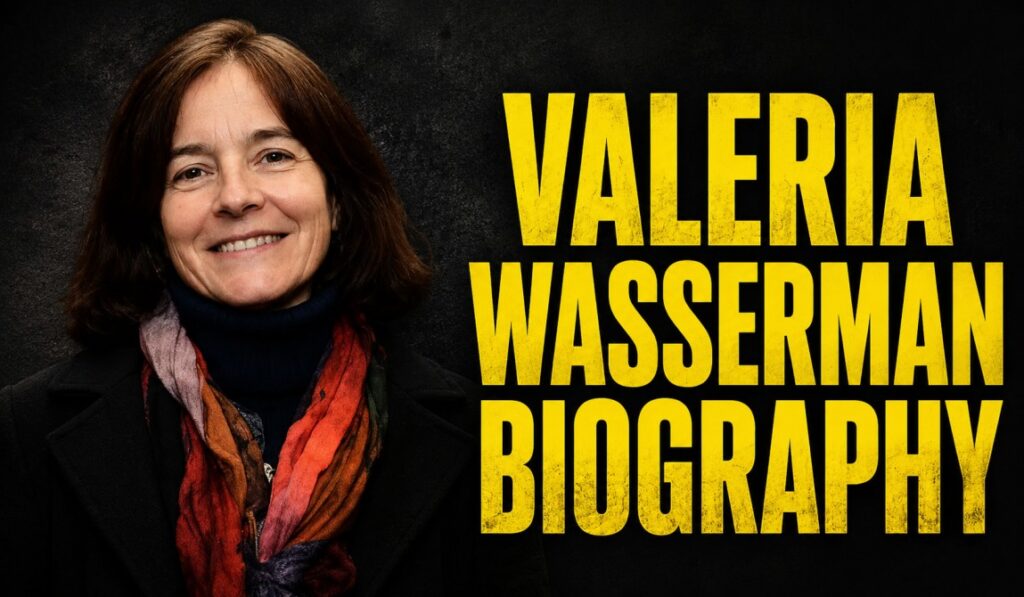
Valeria Wasserman is a Brazilian-born translator, linguist, and academic professional who earned international recognition both through her own distinguished career and through her marriage to Noam Chomsky — the world-renowned intellectual, political philosopher, and founding figure of modern generative linguistics. While Chomsky’s name commands global attention across academic and political circles, Valeria has spent decades quietly building a body of work rooted in cross-cultural communication, philosophical text translation, and language education that stands entirely on its own merits.
Her story is defined by a rare quality in today’s world: substance over spotlight. At a time when proximity to fame is routinely converted into personal celebrity, Valeria has made a consistent and deliberate choice to let her professional contributions speak for her. She was a respected Brazilian translator and linguist long before the world knew her as Noam Chomsky’s wife, and that professional identity remains the truest expression of who she is. This complete biography covers her origins in Brazil, her academic path, her career achievements, her personal life, her character, and her enduring legacy in 2026.
Who Is Valeria Wasserman? A Complete Bio Table
| Detail | Information |
| Full Name | Valeria Galvão Wasserman |
| Date of Birth | 1963 |
| Age in 2026 | Approximately 63 years old |
| Birthplace | Poços de Caldas, Brazil |
| Nationality | Brazilian |
| Profession | Translator, Linguist, Educator |
| Languages | Portuguese (Native), English (Fluent) |
| Husband | Noam Chomsky |
| Year of Marriage | 2014 |
| Education | Universidade Federal Fluminense (Law); Pontifícia Universidade Católica do Rio de Janeiro (Languages & Linguistics) |
| Additional Training | Capital Market Analysis, Universidade de São Paulo (1995) |
| Field of Work | Academic Translation, Philosophical Texts, Cross-Cultural Communication |
| Organisation | ArtVentures Cultural Projects & Translations |
| Step-Children | Aviva, Diane, and Harry Chomsky |
| Current Residence | São Paulo, Brazil / Arizona, USA |
| Public Profile | Deliberately Private |
1. Early Life and Background: Valeria Wasserman Born in Brazil
Valeria Galvão Wasserman was born in 1963 in Poços de Caldas — a picturesque town in Brazil celebrated for its thermal springs, natural beauty, and close-knit cultural community. The precise details of her family background and childhood have never entered the public domain, a reflection of the consistent and principled privacy she has maintained across every stage of her life.
A Childhood Immersed in Language and Cultural Diversity
Brazil is a country unlike almost any other in its linguistic and cultural richness. It is a place where indigenous oral traditions, Portuguese colonial history, African heritage, and successive waves of international immigration have combined to produce one of the most dynamic and diverse societies on earth. Growing up in this environment gave young Valeria something that no classroom alone could provide — an instinctive, lived understanding of how language shapes identity, meaning, and human connection.
From her earliest years, she displayed a natural aptitude for communication and an unusual sensitivity to the way ideas travel — or fail to travel — between different cultural contexts. These were not skills she developed later through academic study alone. They were observations absorbed through daily life in a country where cultural plurality is not an exception but the rule, and where the gap between what is said and what is understood can be wide and consequential.
The Worldview That Brazil Built
Her formative years in Poços de Caldas and the broader Brazilian cultural landscape gave Valeria something that would define her entire professional philosophy: the understanding that true translation is never merely linguistic. It is cultural, historical, and intellectual. A word does not simply have a counterpart in another language — it carries context, connotation, and layers of meaning that must be understood before they can be faithfully rendered. This insight, absorbed through childhood and refined through education, became the intellectual cornerstone of everything Valeria Wasserman would go on to achieve.
2. Valeria Wasserman Education and Academic Background
Valeria’s academic path is a testament to both intellectual curiosity and strategic professional thinking. She did not follow a single, narrow route to expertise — she built a genuinely interdisciplinary foundation across institutions and disciplines that would give her career its distinctive depth and rigour.
Legal Studies at Universidade Federal Fluminense
In 1984, Valeria began her formal higher education at the Universidade Federal Fluminense — one of Brazil’s most respected federal universities — where she enrolled in the study of law. For someone whose career would ultimately centre on language, this choice is revealing. Legal study demands an extraordinarily precise relationship with words. In law, a single term misread or misapplied can alter an argument, a judgement, or an outcome entirely. The discipline trained Valeria to treat language not as an approximate tool but as an exact one — a habit of mind that would prove invaluable throughout her translation career.
Linguistic Studies at Pontifícia Universidade Católica do Rio de Janeiro
Simultaneously in 1984, Valeria also began studying languages and linguistics at the Pontifícia Universidade Católica do Rio de Janeiro (PUC-Rio) — a prestigious institution with deep roots in the Brazilian humanities tradition. Here, she developed formal expertise in translation theory, cross-linguistic communication, cultural mediation, and the structural analysis of language. Where her legal studies sharpened her precision, her linguistic training gave her the conceptual frameworks to understand why language behaves the way it does across different cultural systems.
Advanced Studies in Capital Market Analysis
In 1995, Valeria extended her academic portfolio further by completing a specialisation course in capital market analysis at the Universidade de São Paulo. This addition may appear surprising for a linguist, but it reflects a mind committed to continuous learning and professional versatility — qualities that would allow her to take on a broader range of complex translation projects throughout her career, including those touching on financial and economic subject matter.
Why Her Interdisciplinary Training Matters
The combination of law, linguistics, and financial analysis gave Valeria an academic profile that is genuinely rare in the translation world. Most translators develop expertise in one area. Valeria developed expertise across three — and the intersections between them are precisely where the most demanding translation work lives. Philosophical, legal, economic, and political texts require a translator who can navigate structural precision, cultural nuance, and conceptual depth simultaneously. Valeria’s education equipped her to do exactly that.
3. Valeria Wasserman Professional Career: Translator, Linguist, and Educator
Valeria Wasserman’s professional life is built around the art and discipline of translation — specifically the translation of intellectually demanding philosophical, academic, legal, and political texts between Portuguese and English. This is a field that requires far more than fluency in two languages. It demands a sophisticated grasp of ideas, argumentation, rhetorical structure, and the cultural frameworks within which those ideas were originally produced.
Entering the Profession in the Early 1990s
Valeria began her career as a professional translator in the early 1990s, quickly establishing a reputation for precision and intellectual reliability. Her earliest projects brought her into contact with complex theoretical and philosophical materials, and her ability to handle this kind of content — accurately, clearly, and without flattening its complexity — distinguished her rapidly from less specialised practitioners.
Specialisation in Philosophical and Academic Translation
The defining characteristic of Valeria’s career is her focus on philosophical, cognitive, and political texts — the categories of written work most resistant to mechanical translation. These are documents in which a single word choice can shift meaning entirely, where the translator must understand not only the surface content but the underlying intellectual architecture of the argument being made.
Her professional philosophy — treating translation as intellectual interpretation rather than linguistic substitution — became her signature approach and earned her recognition among academic publishers, research institutions, and intellectual communities across the Portuguese-speaking and English-speaking worlds. Her translations do not simply convert words; they carry meaning faithfully across cultural and linguistic divides, preserving the intent, texture, and argumentative force of the original work.
Work With ArtVentures Cultural Projects and Translations
Valeria has been associated with ArtVentures Cultural Projects & Translations, an organisation operating at the intersection of cultural exchange, language, and intellectual life. This professional affiliation reflects her broader commitment to using linguistic expertise as a vehicle for cultural dialogue and the democratisation of knowledge — making complex ideas available to communities that might otherwise be excluded from them by the accident of language.
Oral Translation and Cultural Mediation
Beyond written work, Valeria has contributed significantly to oral translation and cultural mediation — environments where real-time linguistic and cultural interpretation is required. In these settings, her sensitivity to register, tone, and cultural implication is equally critical, and her background in both legal and philosophical discourse makes her exceptionally well-suited for high-stakes interpretive contexts.
Educator and Mentor
Valeria’s career extends naturally into education and mentorship. She has conducted workshops, seminars, and courses designed to develop linguistic proficiency, translation methodology, and intercultural competence in emerging professionals. Her teaching approach emphasises experiential learning and real-world application, preparing students not just to translate words but to understand the cultures, disciplines, and intellectual traditions from which those words emerge. Many of the language professionals she has mentored have gone on to build successful independent careers, carrying forward the standards and values she instilled in them.
4. Valeria Wasserman Personal Life: Marriage to Noam Chomsky
The dimension of Valeria Wasserman’s life that has attracted the most sustained public curiosity is her relationship with Noam Chomsky — a figure whose intellectual influence on the twentieth and twenty-first centuries is virtually without parallel.
Who Is Noam Chomsky?
Noam Chomsky was born on 7 December 1928 in Philadelphia, Pennsylvania. His academic contributions span generative linguistics, cognitive science, philosophy of mind, political theory, and media criticism. His concept of universal grammar — the idea that all human languages share a common deep structure encoded in human cognition — revolutionised the study of language and made him the most cited living academic across multiple disciplines.
Chomsky spent the core of his academic career at the Massachusetts Institute of Technology (MIT), where he taught for over five decades, before joining the University of Arizona, where he continues to hold a professorship. His first marriage was to Carol Doris Schatz, his childhood companion, with whom he raised three children — Aviva, Diane, and Harry. Carol’s death in 2008 left a significant void in Chomsky’s personal life that would remain for several years.
How Valeria Wasserman and Noam Chomsky Met
The specific circumstances of their first meeting have never been publicly detailed — consistent with both individuals’ preference for personal privacy. However, the context is clear enough. Valeria’s professional world of academic translation and philosophical linguistics placed her in natural proximity to the intellectual circles Chomsky inhabits. Their connection grew from shared professional terrain, complementary intellectual interests, and, by all accounts, genuine personal warmth.
Marriage in 2014 and Life as Partners
Valeria Wasserman and Noam Chomsky married in 2014, uniting two people whose lives were shaped by a deep and abiding commitment to language, ideas, and intellectual integrity. Their partnership has been described consistently as one built on mutual respect, complementary strengths, and shared values — a relationship in which both individuals bring something substantive and irreplaceable.
The couple divides their time between São Paulo, Brazil — Valeria’s home — and Arizona, where Chomsky maintains his university affiliation. This arrangement reflects a genuine mutual accommodation: neither partner has been asked to abandon their roots or their professional base for the other’s convenience.
Valeria’s Role in a High-Profile Household
As the partner of one of the world’s most visible public intellectuals, Valeria has navigated an unusual set of personal circumstances with remarkable composure. When false reports of Chomsky’s death circulated in mid-2024, it was Valeria who stepped forward to publicly refute the misinformation, confirming that her husband was alive and recovering from a stroke. That moment — calm, factual, and protective — offered a rare public glimpse of the steadiness and dignity she brings to her role as his partner.
More recently, Chomsky’s name appeared in broader public discourse in connection with newly released correspondence related to the Jeffrey Epstein documents in late 2025 and early 2026. Valeria has made no public comment on these matters, consistent with her longstanding approach to personal privacy and measured public engagement.
5. Valeria Wasserman Age and Public Profile in 2026
Born in 1963, Valeria Wasserman is approximately 63 years old in 2026. She remains professionally engaged, continuing to take on translation projects and educational work even as Chomsky, now in his late nineties, has necessarily reduced the intensity of his own public schedule.
A Deliberate and Principled Privacy
Valeria’s low public profile is not the result of passivity or insignificance — it is the product of a deliberate, values-driven choice. She has given very few interviews, maintains a minimal digital presence, and has consistently declined to leverage her association with Chomsky for personal visibility or professional advancement. In a media environment that rewards self-promotion relentlessly, this restraint is striking and, in its own way, admirable.
Her approach reflects a professional philosophy consistent with her broader values: the work matters more than the recognition. A translation done well, a student properly mentored, an idea faithfully carried across a linguistic boundary — these are the things that define Valeria Wasserman’s sense of professional achievement, not column inches or social media metrics.
Character, Personality, and Values
Those who have worked with or alongside Valeria describe a person of quiet confidence, intellectual depth, and genuine warmth. She is analytical without being cold, precise without being rigid, and private without being distant. Her professional environment — one that demands cultural empathy, intellectual humility, and meticulous attention to detail — has both shaped and been shaped by a personality naturally inclined toward those qualities.
At the core of her value system sits a commitment to integrity, accuracy, and lifelong learning. She believes that language is not merely a communication tool but a living bridge between human minds and cultures, and she treats every translation project as an act of responsibility toward both the original author and the intended reader.
6. Valeria Wasserman Influence and Legacy
Valeria Wasserman’s legacy is quieter than most, but it is no less real for that. Her contributions to global intellectual culture, linguistic accessibility, and academic translation have shaped how ideas travel across borders in ways that are rarely visible but consistently significant.
Democratising Knowledge Through Translation
The most direct expression of her legacy is the expanded accessibility of complex intellectual work across the Portuguese-speaking world. Through her translations, major works in linguistics, philosophy, cognitive science, and political theory that were previously available only to English-language readers have reached audiences across Brazil and the wider Lusophone community. This democratisation of knowledge is not a trivial achievement — it determines which ideas shape which societies, and which communities are included in or excluded from global intellectual conversations.
The ArtVentures Dimension
Her association with ArtVentures Cultural Projects & Translations reflects an additional dimension of her legacy — one focused on cultural exchange and artistic dialogue across linguistic boundaries. Through this work, Valeria has contributed to a vision of translation as not merely a technical service but a form of cultural diplomacy, capable of building bridges between communities that might otherwise remain intellectually isolated from one another.
A Model of Professional Dignity
Valeria also represents something that deserves explicit acknowledgement: a model of professional integrity in the face of celebrity adjacency. She has not capitalised on her marriage to one of the world’s most famous intellectuals. She has not sought public attention, not pursued media opportunities, and not allowed her husband’s fame to become the primary lens through which her professional identity is understood. In doing so, she has demonstrated that genuine achievement requires no amplification — it endures on its own terms.
Contribution to Cross-Cultural Understanding in 2026
In 2026, as the world becomes simultaneously more connected and more fragmented along linguistic and cultural lines, the work of professionals like Valeria Wasserman carries increasing importance. Her career exemplifies the essential role of translators and linguists in sustaining the global exchange of ideas — not as peripheral service providers but as active, indispensable participants in the advancement of human knowledge and cross-cultural understanding.
FAQs About Valeria Wasserman
Who is Valeria Wasserman?
She is a Brazilian translator, linguist, and educator, best known internationally as the wife of Noam Chomsky, with a distinguished independent career in academic and philosophical translation.
How old is Valeria Wasserman in 2026?
Born in 1963, Valeria Wasserman is approximately 63 years old in 2026, and remains professionally active.
Where was Valeria Wasserman born?
She was born in Poços de Caldas, Brazil — a town known for its thermal springs and cultural richness — though she has kept most details of her early life private.
When and how did Valeria Wasserman marry Noam Chomsky?
Valeria and Noam Chomsky married in 2014, several years after the passing of his first wife Carol Doris Schatz in 2008. Their connection grew through shared intellectual and linguistic professional circles.
What is Valeria Wasserman’s profession?
She is a professional translator and linguist specialising in philosophical, legal, and academic texts between Portuguese and English, and has worked as an educator and mentor throughout her career.
Where did Valeria Wasserman study?
She studied law at Universidade Federal Fluminense, languages and linguistics at PUC-Rio, and completed a capital market analysis specialisation at Universidade de São Paulo in 1995.
Does Valeria Wasserman have children of her own?
Valeria has not publicly disclosed having biological children. She is stepmother to Chomsky’s three children from his first marriage — Aviva, Diane, and Harry Chomsky.
Where does Valeria Wasserman live in 2026?
She divides her time between São Paulo, Brazil and Arizona, USA, where Chomsky holds his university position at the University of Arizona.
What organisation is Valeria Wasserman associated with professionally?
She has been connected to ArtVentures Cultural Projects & Translations, an organisation working at the intersection of language, culture, and intellectual exchange.
Why did Valeria Wasserman step into the public eye in 2024?
She publicly refuted false reports of Noam Chomsky’s death in mid-2024, confirming he was alive and recovering from a stroke — one of the rare occasions she has spoken directly to the media.
Why is Valeria Wasserman significant beyond her marriage to Chomsky?
Her career as a leading academic translator has made complex philosophical and intellectual works accessible to Portuguese-speaking audiences worldwide, contributing meaningfully to global knowledge exchange entirely on her own professional terms.
8. Conclusion
Valeria Wasserman is a woman whose true significance is consistently underestimated — not because it is small, but because she has never sought to magnify it. She stepped into wider public awareness as Noam Chomsky’s wife, but any honest reading of her life reveals a professional whose identity, accomplishments, and values exist wholly independently of that association.
Her decades-long career as a Brazilian translator and linguist has quietly shaped the intellectual landscape of the Portuguese-speaking world, carrying complex ideas across linguistic borders with a fidelity and precision that only the most skilled practitioners can achieve. Her academic training — spanning law, linguistics, and financial analysis across three of Brazil’s finest institutions — gave her a depth and versatility that defines her work to this day.
Her personal life, built around a genuine intellectual partnership with one of the twentieth century’s most consequential minds, reflects a relationship grounded in mutual respect, complementary strengths, and shared devotion to language and ideas. And her consistent, decades-long choice of privacy and professional dignity over public attention reflects a woman entirely at ease with who she is — someone who has never needed external validation to understand the value of what she does.
In 2026, Valeria Galvão Wasserman remains one of the most quietly compelling figures at the intersection of language, culture, and intellectual life. Her story is not a footnote to Noam Chomsky’s biography. It is a complete, meaningful, and independently worthy narrative — one that deserves to be read, understood, and remembered on its own terms.

I’m John Ilam, a content writer on AgeBioHub, focused on creating biography-based articles. I write about public figures, their life stories, careers, and personal backgrounds in a clear and simple way.
I keep my content focused on biographies so readers can easily find the information they’re looking for without confusion. My goal is to make every article informative, structured, and easy to read.